English
 عربى
عربى 中文简体
中文简体


Materials & Safety — Industrial Gas Storage
Steel vs. Aluminum Gas Cylinders: Which Is Safer?
There is no single winner between steel and aluminum gas cylinders when it comes to overall safety. Both materials meet strict international pressure vessel standards — the real difference lies in how each metal behaves under stress, corrosion, and impact.
In short: aluminum cylinders tend to offer better corrosion resistance and a more predictable, ductile failure pattern, while steel cylinders generally offer higher pressure ratings and better resistance to dents and mechanical damage. The safest choice depends on the gas being stored, the environment, and how the cylinder will be handled.
How Steel and Aluminum Cylinders Are Made
Steel gas cylinders are typically manufactured from chromium-molybdenum alloy steel or carbon steel, formed through deep drawing or hot spinning processes into a seamless one-piece body. This seamless construction eliminates weld seams, which historically were the weak point in early cylinder designs. Aluminum cylinders, by contrast, are most often forged from aluminum alloy 6061-T6, a heat-treated alloy chosen specifically for its strength-to-weight ratio and consistent grain structure after forging.
aluminum cylinders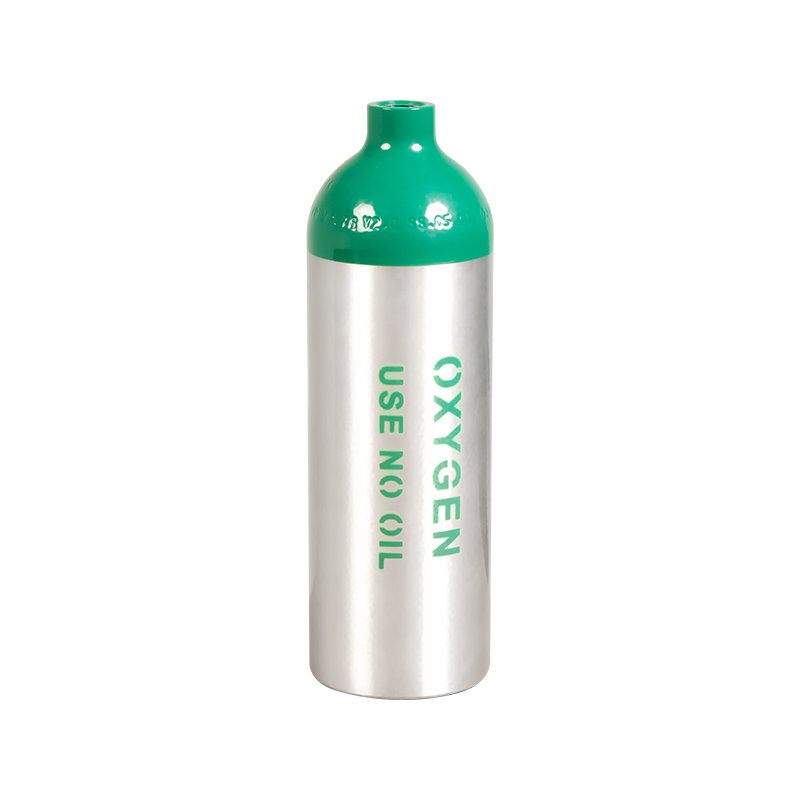
Both manufacturing methods produce cylinders that must pass hydrostatic testing, where the vessel is pressurized to roughly 1.5 to 1.67 times its rated working pressure without permanent deformation. A cylinder that fails this test is rejected before it ever reaches the market, so any cylinder legally sold for gas storage has already demonstrated a substantial safety margin above its labeled pressure rating.
Weight and Handling Safety
One of the most practical safety differences between the two materials is weight. Aluminum is roughly one-third the density of steel, which means an aluminum cylinder of equivalent volume can weigh 30 to 40 percent less than its steel counterpart. This matters for safety in ways that are easy to overlook:
- Lighter cylinders reduce the risk of back and shoulder injuries during manual lifting and transport.
- Lower mass means less kinetic energy if a cylinder is dropped or tips over, reducing impact force on floors, feet, or equipment.
- Easier handling reduces the likelihood of a cylinder being dragged, dropped, or improperly secured, all of which are common causes of valve damage.
This is a major reason scuba divers, mobile medical teams, and field technicians frequently prefer aluminum over steel, even though steel cylinders can often hold more gas per unit volume at a given pressure rating.
Corrosion Resistance and Long-Term Integrity
Corrosion is one of the leading causes of cylinder failure over a long service life, and this is where the two materials diverge sharply. Steel cylinders are vulnerable to both external rust from atmospheric moisture and internal corrosion if any water vapor enters the cylinder during filling. Once corrosion begins, it can thin the cylinder wall unevenly, creating stress points that are difficult to detect without ultrasonic testing.
Aluminum naturally forms a thin, stable oxide layer on its surface that protects the underlying metal from further oxidation. This is why aluminum cylinders are the standard choice in humid, coastal, or marine environments, and why an aluminum nitrogen bottle used in outdoor industrial or laboratory settings typically shows far less surface degradation after years of exposure compared to an unprotected steel bottle.
Warning
Aluminum is not immune to all forms of corrosion. It can be vulnerable to stress corrosion cracking if repeatedly exposed to certain chemicals, moisture combined with high sustained pressure, or improper coatings, which is why quality manufacturers apply specific alloy treatments and coatings to mitigate this risk.
Failure Behavior: Ductile vs. Brittle Fracture
Steel tends to bulge or deform before rupturing under extreme overpressure — aluminum, particularly 6061-T6, can behave in a more brittle manner under certain conditions.
This is arguably the most important safety distinction between the two metals, and it is often overlooked by buyers focused only on weight or price. Steel is generally more ductile at typical operating temperatures, giving some warning before catastrophic failure. Aluminum alloy can lose ductility at very low temperatures or after prolonged exposure to elevated heat, which can affect the heat-treated temper of the alloy.
Danger — Fire Exposure
In fire exposure scenarios, steel cylinders generally retain more structural integrity at moderate temperatures, while aluminum begins to lose significant strength above approximately 300°F (149°C) and can weaken well before reaching its melting point of around 1,220°F (660°C). This is one reason fire safety codes often require pressure relief devices on aluminum cylinders that activate at lower temperature thresholds than those used on steel cylinders.
Pressure Ratings and Application-Specific Safety
Steel cylinders typically support higher working pressures for a given wall thickness, which is why large industrial cylinders for gases like nitrogen, argon, and oxygen at very high pressures (above 2,640 psi / 182 bar) are more commonly manufactured from steel. Aluminum cylinders are widely used in the 2,000 to 3,000 psi range and are the standard choice for medical oxygen, scuba diving, and smaller portable industrial applications where weight matters more than maximum pressure capacity.
| Factor | Steel Cylinders | Aluminum Cylinders |
|---|---|---|
| Relative Weight | Heavier | 30–40% lighter |
| Corrosion Resistance | Lower, prone to rust | Higher, natural oxide layer |
| Max Working Pressure | Generally higher | Moderate to high |
| Fire / Heat Behavior | Retains strength longer | Weakens at lower temps |
| Impact Resistance | Higher dent resistance | More prone to denting |
| Typical Service Life | 10–15 years (environment dependent) | 15–20+ years (with proper care) |
Safety by Gas Type and Use Case
Choosing between steel and aluminum is not purely a material question; it depends heavily on what gas is being stored and how the cylinder will be used day to day.
Medical and Portable Oxygen — Aluminum is the dominant choice for medical oxygen cylinders because weight directly affects patient mobility and caregiver safety. A lighter cylinder is easier to transport in emergency vehicles, wheelchairs, and home care settings, reducing the chance of drops or strain injuries.
Info — Industrial Nitrogen & Inert Gas Storage
For inert gases like nitrogen and argon used in laboratories, welding shops, and calibration equipment, an aluminum nitrogen bottle is often favored specifically because nitrogen itself is non-reactive, so the corrosion resistance of aluminum protects the cylinder rather than the gas requiring special metal compatibility. In high-pressure industrial nitrogen banks, however, steel remains common because it can be built to higher pressure ratings at a lower relative cost.
Scuba Diving and Marine Environments — Saltwater exposure accelerates corrosion on steel far more than on aluminum, which is why the diving industry has largely standardized around aluminum tanks despite their slightly lower buoyancy characteristics compared to steel.
Inspection, Maintenance, and Lifespan Safety
Safety over a cylinder's lifetime depends as much on maintenance as on the base material. Both steel and aluminum cylinders require periodic hydrostatic testing, generally every 5 years in most regulatory frameworks, along with visual inspections before each fill for dents, gouges, bulges, or corrosion.
- Inspect the cylinder neck and shoulder area, where cracks are most likely to originate.
- Check for pitting corrosion, especially on steel cylinders stored outdoors or in humid conditions.
- Verify that the pressure relief device and valve threads show no signs of damage or leakage.
- Confirm the hydrostatic test date stamp is current and legible.
Success — Proper Care Extends Service Life
Well-maintained aluminum cylinders can often remain in safe service for 15 to 20 years or more, while steel cylinders in harsh environments may need replacement sooner if corrosion outpaces the benefit of their higher raw pressure tolerance.
Cost Considerations Tied to Safety
Steel cylinders are generally less expensive to manufacture, which is one reason they remain popular for large industrial gas supply where raw pressure capacity and cost efficiency matter more than portability. Aluminum cylinders typically carry a higher upfront cost due to the raw material price and forging process, but this is often offset over time by lower corrosion-related replacement rates and reduced handling injury claims in workplaces with frequent cylinder movement. When evaluating total cost of ownership, safety-related savings from reduced injuries and extended service life should be weighed alongside the initial purchase price.
Making the Right Choice for Your Situation
Rather than asking which metal is universally safer, the more useful question is which risks matter most in your specific setting. If your priority is minimizing injury from manual handling, working in a humid or marine environment, or transporting cylinders frequently, aluminum is typically the safer practical choice. If your priority is maximum pressure capacity, resistance to mechanical impact, or retained strength during fire exposure, steel often has the edge.
In many facilities, the safest overall strategy is not choosing one material exclusively but matching cylinder type to application: steel for high-pressure stationary industrial gas banks, and aluminum for portable, medical, and corrosion-prone use cases. Whichever material is selected, consistent inspection schedules, proper storage away from extreme heat, and correct handling procedures remain the single largest factor in preventing cylinder-related incidents, often outweighing the inherent properties of the metal itself.