English
 عربى
عربى 中文简体
中文简体


Materials & Weight — Industrial Gas Storage
Are Aluminum Gas Cylinders Lighter Than Steel Cylinders?
Aluminum gas cylinders are consistently lighter than steel gas cylinders of the same volume and pressure rating — a direct result of raw material density that reshapes how industries handle, ship, and select their gas storage.
Aluminum weighs about 2.7 grams per cubic centimeter, compared to roughly 7.85 grams per cubic centimeter for steel, making aluminum less than one-third the density of steel. In real-world terms, an aluminum cylinder holding the same volume of gas at a comparable pressure rating typically weighs 30 to 45 percent less than its steel counterpart. This weight difference is not a minor manufacturing detail; it directly shapes which industries choose aluminum, how cylinders are handled, and even how they are regulated for transport and daily use.
Why the Density Difference Matters So Much
Weight in a pressure vessel is not simply a matter of the metal's density; it also depends on wall thickness, which is engineered based on the strength of the alloy used. Steel has a higher tensile strength per unit thickness than most aluminum alloys, but aluminum cylinders compensate through alloy selection and heat treatment, most commonly aluminum alloy 6061-T6, which offers a strong strength-to-weight ratio without requiring excessive wall thickness.
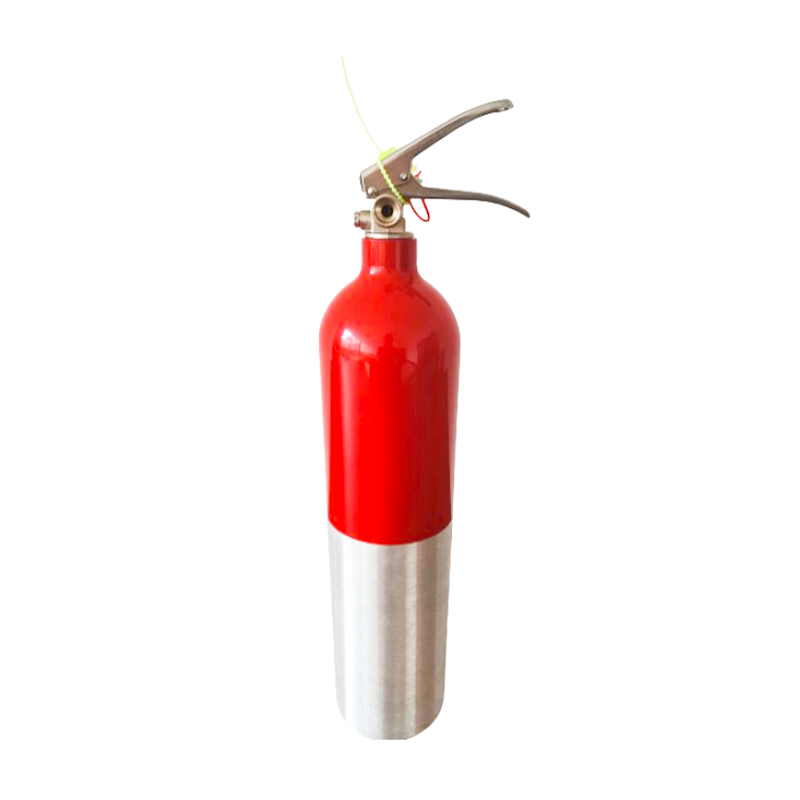
Aluminum gas cylinders
The result is that even though aluminum walls are often somewhat thicker than steel walls at equivalent pressure ratings, the overall weight savings from the lower base density still wins out. This is why a standard 80 cubic foot aluminum scuba cylinder weighs approximately 32 to 35 pounds empty, while a steel cylinder of similar capacity can weigh 28 to 30 pounds — but the steel cylinder typically holds a higher working pressure, so a true apples-to-apples comparison depends heavily on matching pressure ratings and internal volume precisely.
Real-World Weight Comparisons by Cylinder Type
Weight differences become clearer when comparing specific cylinder categories side by side. Below is a general comparison across common cylinder sizes used in medical, industrial, and recreational applications.
| Cylinder Type | Steel Weight (approx.) | Aluminum Weight (approx.) |
|---|---|---|
| Small medical oxygen (M6/ML6) | 1.6 kg | 1.0 kg |
| Portable CO2 cylinder (20 lb) | 13.6 kg | 9.5 kg |
| 50L industrial nitrogen cylinder | 65 kg | 45 kg |
| 80 cu ft scuba cylinder | 13.2 kg | 15.5 kg (larger volume needed) |
Note that in scuba applications, aluminum cylinders sometimes require slightly larger physical dimensions to achieve the same gas capacity due to their lower operating pressure, which is why weight comparisons should always account for both volume and pressure rating rather than size alone.
Why Weight Matters in Everyday Use
The practical impact of a lighter cylinder extends far beyond simple convenience. Weight directly affects safety, efficiency, and cost across nearly every application where gas cylinders are used.
Reduced Injury Risk from Manual Handling — Workers who lift, carry, or reposition cylinders multiple times per shift face a cumulative injury risk from repetitive strain. A cylinder that is even 10 to 15 pounds lighter can meaningfully reduce the physical load on the lower back and shoulders over hundreds of repetitions per month.
Lower Transportation and Shipping Costs — For businesses that ship cylinders regularly, such as beverage carbonation suppliers or medical gas distributors, the cumulative weight savings from switching to aluminum can translate into measurable freight cost reductions, particularly when shipping large batches of small to mid-sized cylinders like an aluminum CO2 cylinder used in beverage dispensing systems.
Improved Portability for Field and Mobile Use — Technicians who carry cylinders into the field, such as welders, HVAC service providers, or laboratory staff transporting an aluminum nitrogen tank between testing sites, benefit directly from reduced fatigue and easier one-person handling compared to an equivalent steel cylinder.
Trade-Offs That Come With Lighter Weight
Choosing aluminum for its lighter weight does involve some trade-offs that buyers should understand before making a decision.
- Aluminum cylinders are generally more prone to denting on impact compared to steel, since aluminum has lower surface hardness.
- For very high-pressure applications above roughly 3,000 psi, steel often remains the more practical and cost-effective choice due to wall thickness requirements.
- Aluminum cylinders typically cost more upfront per unit of gas capacity than equivalent steel cylinders, though this is often offset by long-term handling and shipping savings.
- Some large-capacity industrial applications simply require the higher pressure ceiling that steel construction more easily provides.
How Buoyancy and Volume Affect Perceived Weight in Diving
An aluminum tank becomes positively buoyant as gas is consumed during a dive, while steel tanks tend to remain negatively buoyant throughout.
In scuba diving specifically, the weight comparison is more nuanced than in most other applications. Because aluminum operates at lower working pressures than steel for the same capacity rating, aluminum tanks are physically larger to hold an equivalent volume of breathing gas. This means an aluminum 80 cubic foot tank can actually weigh slightly more out of the water than a steel 80 cubic foot tank. Divers choose between the two not purely based on raw weight, but based on how that weight behaves underwater and how it affects trim and buoyancy control.
Industries Where Lighter Aluminum Cylinders Are the Standard
Info — Where Aluminum Leads
- Medical oxygen and home healthcare, where patients or caregivers must lift and transport cylinders daily.
- Beverage carbonation and draft systems, where an aluminum CO2 cylinder is easier to swap behind bars and in food service kitchens with limited storage space.
- Laboratory and analytical instrumentation, where an aluminum nitrogen tank is frequently moved between benches and equipment for calibration and purging tasks.
- Recreational scuba diving, motorsports fire suppression systems, and portable welding setups, all of which prioritize ease of transport.
How to Compare Weight When Choosing a Cylinder
When evaluating cylinders for a specific use case, weight alone should never be the only factor. Buyers should compare empty (tare) weight, gas capacity, working pressure rating, and physical dimensions together to get an accurate picture of practical usability.
Success — A Useful Formula
Divide the empty cylinder weight by its usable gas volume at rated pressure to get a weight-to-capacity ratio. Aluminum cylinders generally achieve a more favorable weight-to-capacity ratio for low to moderate pressure applications, while steel often becomes more efficient at very high pressures where its superior tensile strength allows thinner relative wall construction.
Final Takeaway
Aluminum gas cylinders are, in the overwhelming majority of comparable use cases, lighter than steel cylinders, and this weight advantage translates into real benefits for handling safety, transportation cost, and daily portability. The exceptions occur mainly in very high-pressure industrial applications and in certain diving scenarios where volume requirements offset the density advantage.
For most buyers selecting between an aluminum and steel cylinder of similar capacity, weight will be one of the clearest and most immediately noticeable differences, and for applications involving frequent handling, such as medical oxygen delivery, beverage carbonation, or field laboratory work, that lighter weight often becomes the deciding factor in the purchase decision.