 English
 عربى
عربى 中文简体
中文简体

3KG Portable Steel Fire Extinguisher(CK45/CE)
Cat:CO2 Fire Extinguisher (CK45/CE)
The 3kg portable steel fire extinguisher is a firefighting device designed to deal with all types of fires. Made of CK45 steel, it is sturdy and durab...
See Details
+86 13857576559
There is no refrigeration inside a carbon dioxide extinguisher, yet the jet leaving the horn lands near minus 78 degrees Celsius. Here is where that figure comes from, how far the cold travels, and what it changes when you specify, handle or service one.
Discharge a five-kilogram CO2 unit into a test pan and the sequence is always the same. The horn goes white with frost within seconds, fine snow blows off the cone, and anyone who grabs the metal without thinking pulls a hand back fast. That reaction is not an exaggeration. The stream leaving a CO2 horn typically measures between minus 70 and minus 80 degrees Celsius, with the most quoted reference point at minus 78.5 degrees Celsius, the temperature at which dry ice turns straight into gas.
One number answers a surprising number of practical questions: why the horn must never be gripped, why the cylinder itself never freezes, and why the hose on a well-made unit is specified the way it is.
If you need a single figure, take minus 78 degrees Celsius, roughly minus 109 degrees Fahrenheit, as the temperature of the gas and dry-ice particles leaving a CO2 horn. Real measurements drift, which is why published values scatter between about minus 70 and minus 80 Celsius. Ambient temperature, how long the trigger is held, the shape of the horn and how recently the unit was used all move the reading by a few degrees.
What matters just as much is where the cold sits. The cylinder body stays near room temperature throughout; the cold is generated at the point of expansion and leaves with the stream.
| Point on the unit | Typical temperature | What the operator notices |
|---|---|---|
| Cylinder shell | Close to ambient, 15 to 30 °C | Feels normal, at most slightly cool |
| Liquid CO2 inside | At ambient temperature, held at roughly 55 to 60 bar | Nothing visible; the cylinder is self-pressurised |
| Valve outlet | Falls sharply once flow begins | Metal chills fast, light frost can form |
| Hose | Well below zero, colder as discharge continues | Stiffens, surface frost appears |
| Horn and nozzle exit | About −70 °C to −80 °C | Dense white snow, heavy frosting on the cone |
| Dry-ice particles in the jet | −78.5 °C (sublimation point) | Snow that becomes gas without melting |
Note
Read these as typical values, not fixed specifications. A unit emptied in one continuous pull behaves differently from one used in short bursts, and a cylinder warmed by summer sun starts its discharge at a higher pressure.
There is no cooling circuit, refrigerant or compressor inside a CO2 extinguisher. The cold is a by-product of decompression, and that single fact explains both the extinguishing performance and the handling rules.
Carbon dioxide is stored as a liquid in equilibrium with its vapour, which makes the cylinder self-pressurising at roughly 55 to 60 bar at ordinary room temperature. When the valve opens, that liquid is forced into a passage at atmospheric pressure. A large share of it flashes instantly into gas, expanding several hundred times in volume and taking the heat it needs from the liquid that remains. What is left freezes into the fine dry-ice particles that give the jet its white look. The expansion happens so quickly that the stream has no time to draw warmth from the surrounding air before it leaves the horn.
Roughly half the stored mass leaves as vapour and the rest as dry-ice snow. That is why the cloud looks solid and the temperature collapses at the same moment.
Carbon dioxide attacks a fire in two ways at once. The expanding cloud displaces oxygen around the seat of the fire, while the cold stream removes heat from the fuel surface and slows the release of flammable vapour. On a flammable liquid fire that combination works quickly and leaves no residue, which is why CO2 is common around electrical equipment and clean production areas. The limitation is that the cooling disappears as soon as the gas disperses, so smouldering solids and hot metal can reignite.
People often assume the whole extinguisher turns cold after use. It does not. Each component sits at a different point on the temperature curve, and that is exactly why the parts are made from different materials.
At minus 78 degrees Celsius, bare skin touching frost-coated metal can suffer a cold burn in well under a second. There is no flame and no glow of warning; the sensation is a sharp sting followed by numbness. Repeated exposure, or a jet directed at exposed skin, can cause tissue damage comparable to a thermal burn, and the full extent may not be clear until the area thaws.
Safety
Never grip the horn, never direct a CO2 jet at a person, and always ventilate after discharge. In a confined space the expanding cloud can push oxygen levels low enough to cause dizziness or loss of consciousness within seconds.
Handling rules are short enough to remember under pressure:
For anyone sourcing CO2 equipment, minus 78 degrees Celsius is not an abstract figure; it becomes a set of material decisions. The cylinder is usually a seamless steel shell, with CK45 and comparable grades common in high-pressure CO2 service, because the stored pressure is constant and the shell must contain it for years without fatigue. Valve internals matter just as much: seats, seals and springs have to stay dimensionally stable and flexible at low temperature, and the horn and hose must remain intact rather than turn brittle in the cold stream.
A five-kilogram portable unit built on a CK45 shell is a typical example of that combination: a cylinder rated for the stored pressure, a valve made for CO2 rather than adapted from another agent, and a horn sized to keep the snow aimed where it belongs.
The valve is where the cold is created, so a CO2-specific valve is not interchangeable with a dry powder fitting. Temperature adaptability across the full discharge cycle is a recurring theme in the technical notes published on high-pressure CO2 equipment, and it is worth reading that detail before writing a purchase specification.
That same set of constraints shapes how CO2 extinguishers and cylinders are built and tested here, from shell material through to the grip on the handle.
Capacity changes how the cold is experienced, not how cold the stream is. A two- or three-kilogram portable empties quickly, delivering a short, intense burst and a horn that frosts almost at once. A five-kilogram portable gives a longer working window, which suits a vehicle bay, a small server room or a workshop corner. Trolley units at ten and twenty-five kilograms are chosen when the discharge must last long enough to walk a spill, and their longer hoses keep the operator further from the cold end.
There is a trade-off worth naming. A longer discharge pushes more mass through the same horn, so the frost layer builds rather than clears and the metal stays cold well after the trigger is released.
| Setting | Practical choice | Why it fits |
|---|---|---|
| Server room or electrical cabinet | 2 kg to 5 kg portable CO2 | Clean agent, no residue; short bursts keep the horn manageable |
| Vehicle workshop or small warehouse | 5 kg portable CO2 | Longer discharge window and more distance from the horn |
| Flammable liquid storage | 10 kg to 25 kg trolley CO2 | Larger agent volume and a long hose that keeps the cold at arm's length |
| Deep-seated Class A materials | Not CO2 alone | Cooling fades as the gas disperses; reignition risk stays high |
Quick reference
Minus 78.5 degrees Celsius is the sublimation point of dry ice, and it is the number to remember when you train staff or write a specification.
How cold a CO2 extinguisher gets comes down to a simple chain: stored pressure, a sudden drop at the valve, and a jet that leaves the horn far colder than anything else on the unit. Treat that cold as a normal part of how the equipment works, plan the handling rules around it, and the very property that makes CO2 effective on electrical and liquid fires stops being a surprise on the shop floor.
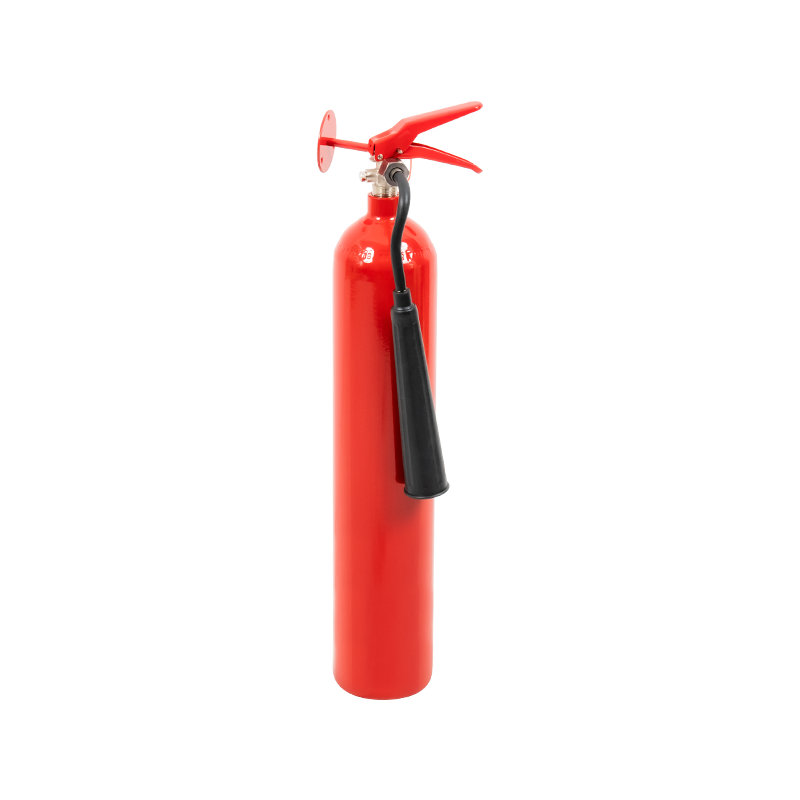
The 3kg portable steel fire extinguisher is a firefighting device designed to deal with all types of fires. Made of CK45 steel, it is sturdy and durab...
See Details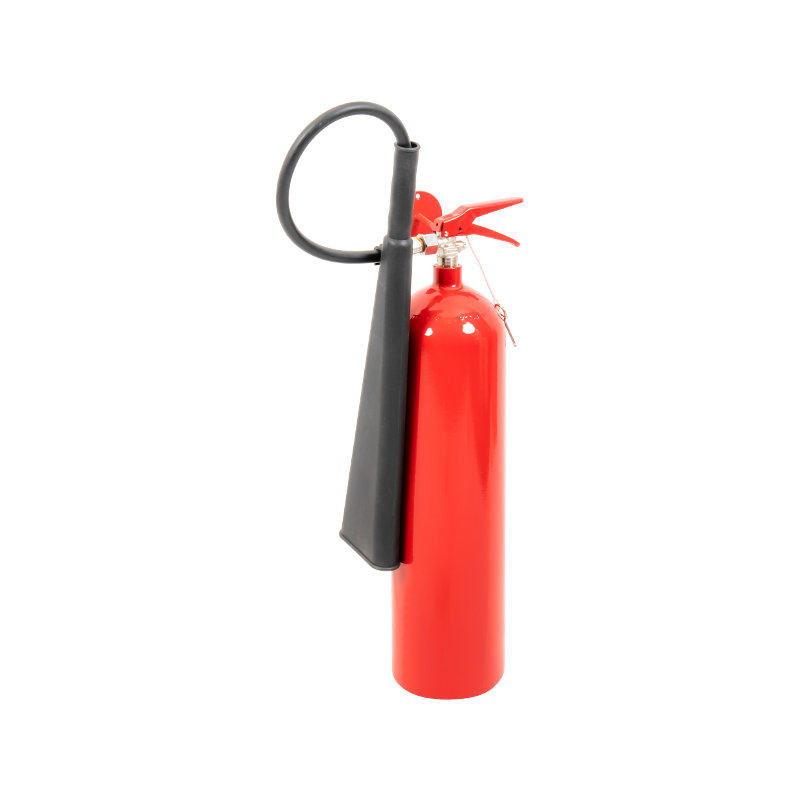
The 5kg CO2 CE extinguisher is suitable for a variety of applications, including in factories, production lines and warehouses. The 5kg CO2 extinguish...
See Details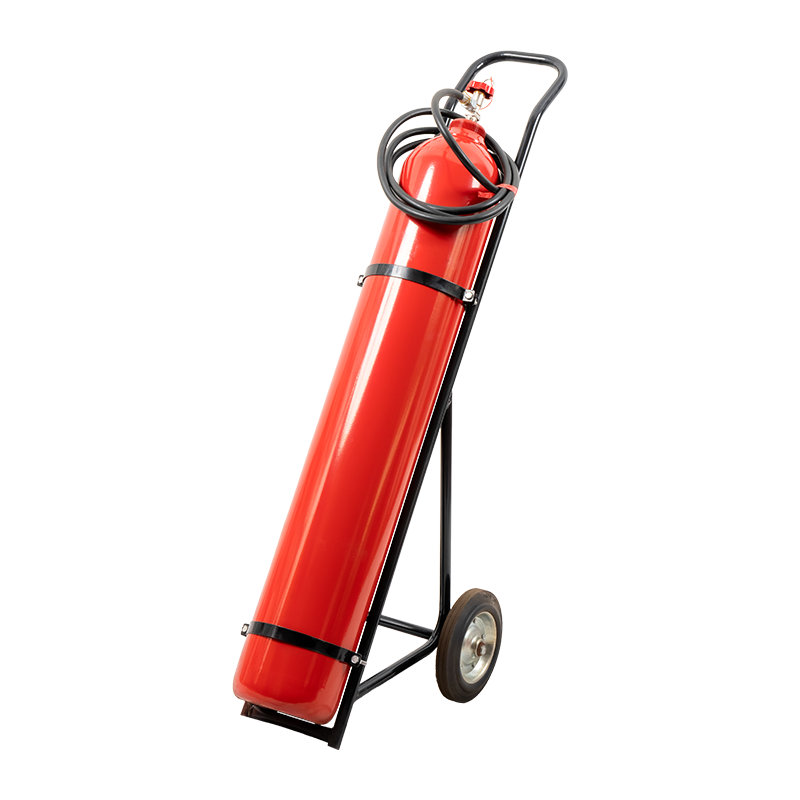
The 10KG Steel Cart-Mounted CO2 Fire Extinguisher is a portable firefighting tool consisting of a large steel cylinder with a capacity of 10kg CO2, mo...
See Details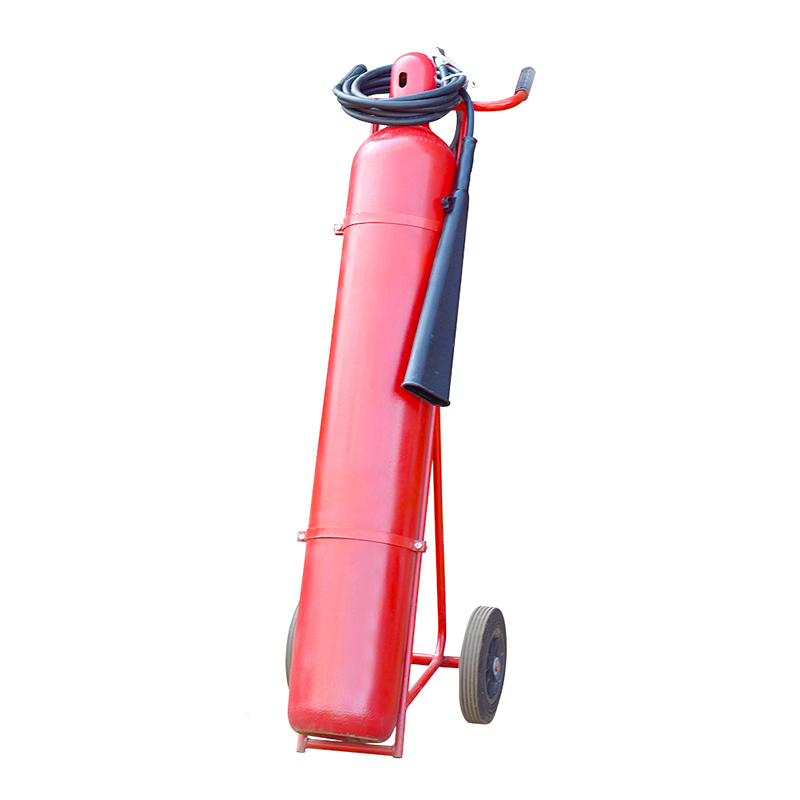
The 25kg trolley mobile fire extinguisher is a high-capacity fire-fighting equipment designed for large-scale fires. It has mechanical strength and co...
See Details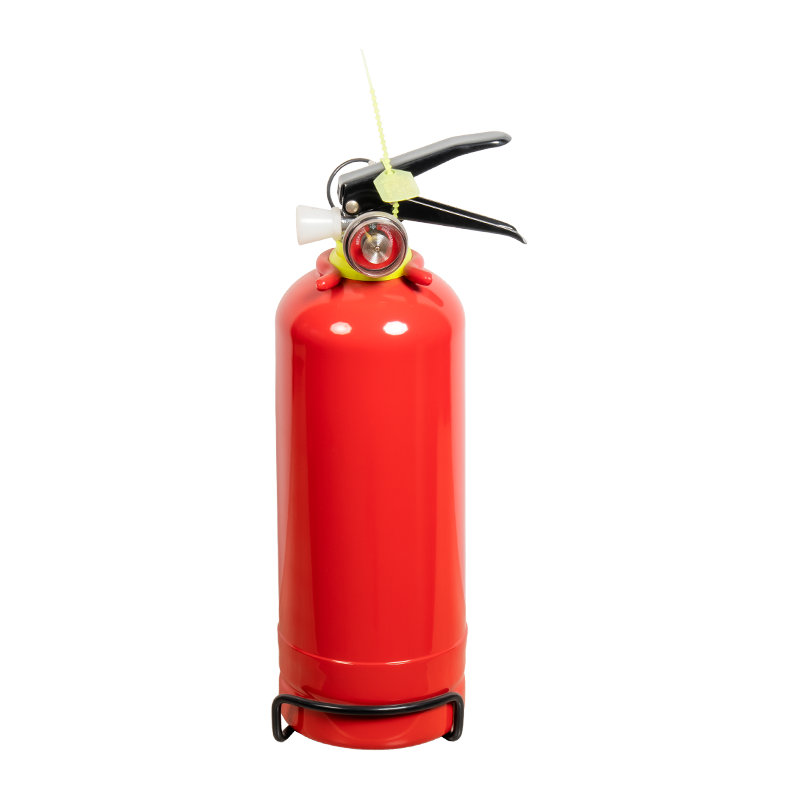
The 1kg portable dry powder fire extinguisher is a safety device used to put out small fires in emergency situations. Its outer shell is made of steel...
See Details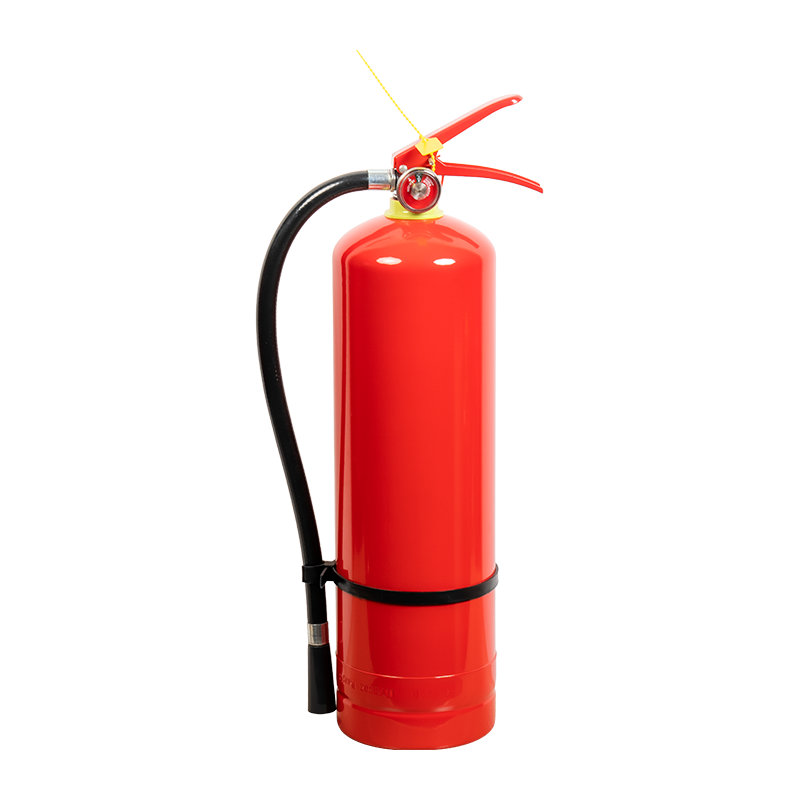
The 6kg stainless steel portable dry powder fire extinguisher is a fire extinguishing device suitable for extinguishing various small fires. Dry powde...
See Details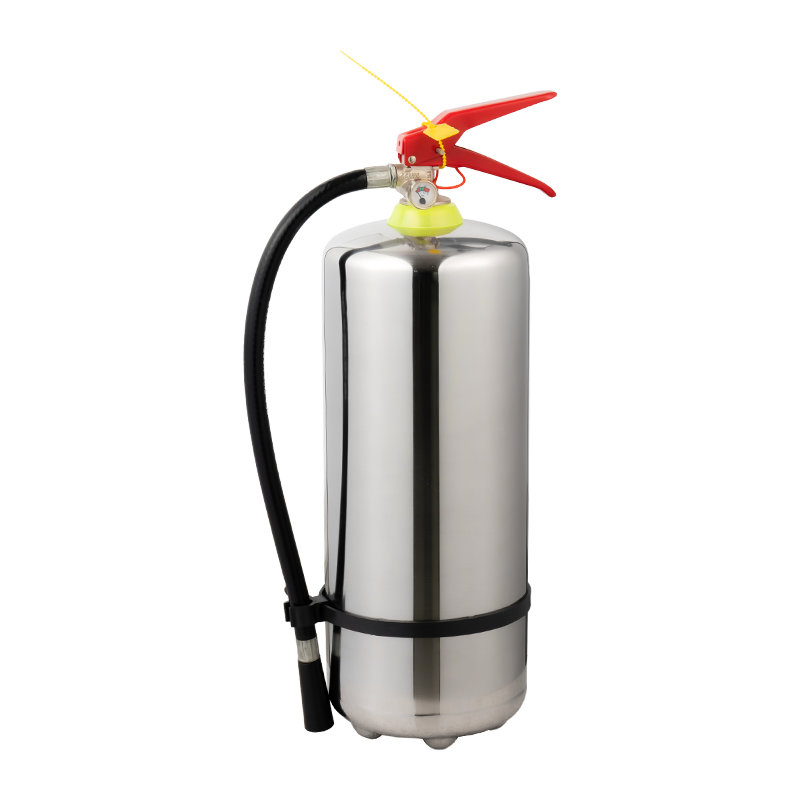
304 stainless steel 6L fire extinguisher is a professionally designed fire extinguishing equipment, made of high-quality SUS304 stainless steel materi...
See Details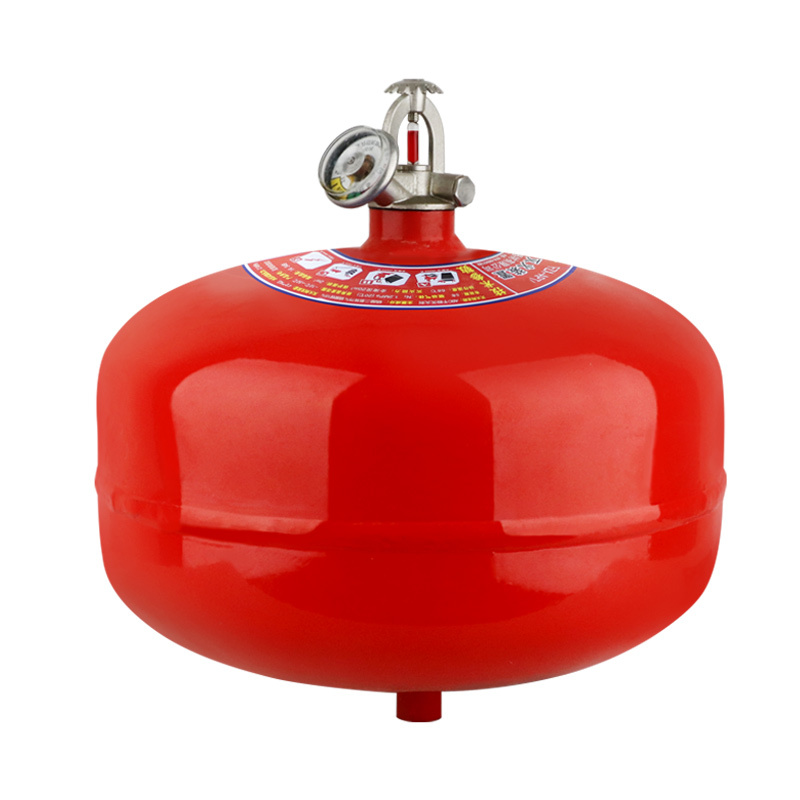
8KG hanging fire extinguisher can be installed on the wall or ceiling, fixed by hook or bracket, making it easy to quickly access and operate when nee...
See Details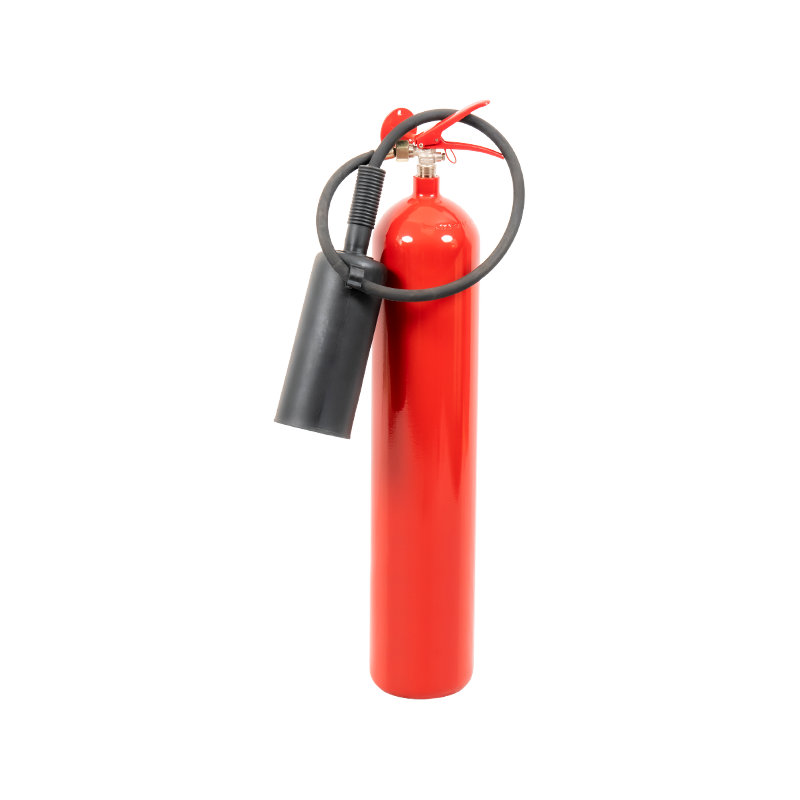
The 5kg fire-fighting carbon dioxide fire extinguisher can work in a wide temperature range, from -30˚C to +60˚C, to meet the firefighting needs in va...
See Details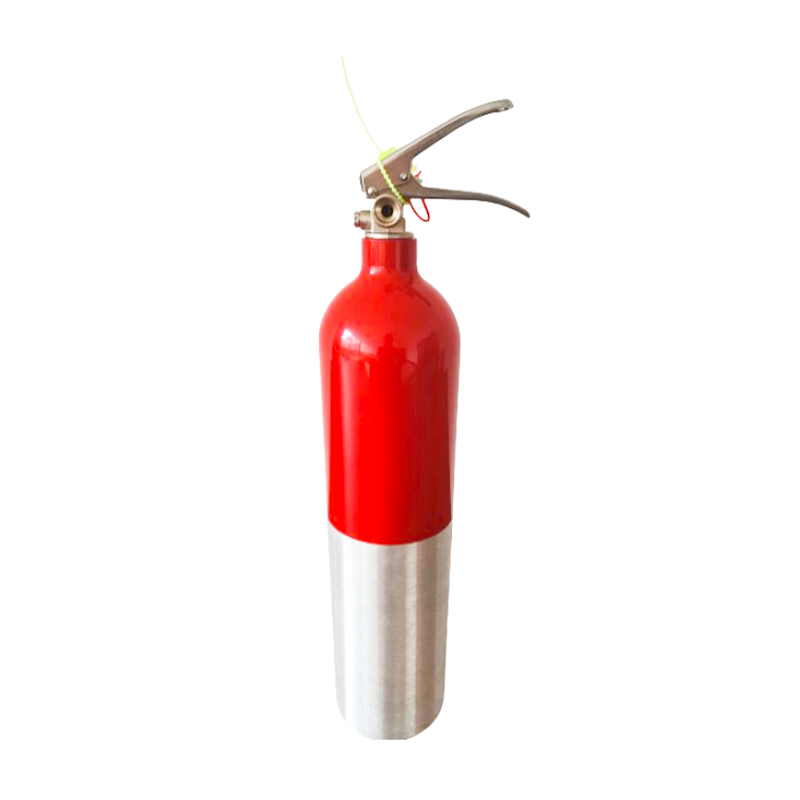
The 5KG portable aluminum fire extinguisher is an efficient and reliable fire extinguishing equipment suitable for fire protection needs in various in...
See Details
Zhejiang Yongshang Pressure Vessel Co., Ltd. was established in 2016. It is a modern enterprise integrating R&D, production and sales, specializing in the production of dry powder, carts, carbon dioxide fire extinguishers, seamless steel cylinders, and aluminum bottles.

+86 13857576559


Zhuhai Village, Gaibei Town, Shangyu District, Shaoxing City, Zhejiang Province, China
