 English
 عربى
عربى 中文简体
中文简体

3KG Portable Steel Fire Extinguisher(CK45/CE)
Cat:CO2 Fire Extinguisher (CK45/CE)
The 3kg portable steel fire extinguisher is a firefighting device designed to deal with all types of fires. Made of CK45 steel, it is sturdy and durab...
See Details
+86 13857576559
The frost that creeps across the discharge horn is not a fault and not a gimmick. It is liquefied carbon dioxide changing phase across a few centimetres of travel, and understanding it changes how you specify, position and maintain CO2 equipment.
Discharge a 5 kg carbon dioxide extinguisher into an open cabinet and the sequence is quick and unmistakable. The horn turns white with frost within two or three seconds, and a pale snow-like dust scatters from the nozzle, vanishing almost as soon as it lands. Anyone who grabs that horn with a bare hand learns something about carbon dioxide they will not forget.
The short answer first: a CO2 extinguisher makes things cold because the carbon dioxide inside it is stored as a pressurised liquid and has to change phase on the way out. Expansion from roughly 57 bar down to atmospheric pressure, plus the energy the CO2 absorbs as it boils and partly freezes, brings the leaving stream to about -70 °C as gas and about -78.5 °C as solid dry ice particles. That cold is a by-product of how the agent is stored. It is not the reason a CO2 unit puts out a fire.
A CO2 cylinder is not a simple tank of compressed gas. At 20 °C ambient the carbon dioxide sits as a saturated mixture: liquid at the bottom, vapour above it, both at roughly 57 bar. Warm the room to 30 °C and the pressure climbs to around 72 bar. That is why the shell is thick, why the unit carries a rupture disc instead of relying on the operator, and why the pressure gauge is really a temperature gauge.
Inside the cylinder a siphon tube reaches close to the bottom so the valve draws liquid rather than vapour. This matters more than most owners realise: a liquid feed gives a fast, heavy discharge, while a vapour-only feed would starve the nozzle and stretch discharge time well beyond the rated figure.
The transformation itself happens at the valve orifice. Across a gap of a few millimetres, pressure collapses from more than 50 bar to atmospheric. Liquid cannot remain liquid under those conditions. Part of the mass flashes instantly to gas and the rest freezes into fine dry ice particles. Both leave the horn cold enough to frost metal, to condense the water vapour in the surrounding air, and to damage skin.
When a pressurised liquid is forced through a small opening it expands, and that expansion is paid for out of the fluid's own internal energy, because there is no time for heat to flow in from the surroundings. At normal working pressures carbon dioxide has a positive Joule-Thomson coefficient, which means throttling it cools it rather than warming it. The stream is already colder the instant it clears the orifice.
Boiling liquid CO2 into gas, and then freezing part of that gas into a solid, both consume energy. The CO2 supplies that energy from its own remaining mass. The solid fraction is dry ice, the same material used in cold-chain shipping, and it sublimes straight back to gas at -78.5 °C.
Combine the two effects and the behaviour on site makes sense: a fast-moving mist of gas at about -70 °C carrying solid particles at about -78.5 °C, travelling through a horn that is usually moulded from an insulating polymer for precisely that reason.
The cold is not the extinguishing mechanism. It is the unavoidable signature of storing a firefighting agent as a liquefied gas and releasing it in under a second.
The table below traces a typical 5 kg CO2 extinguisher discharging at 20 °C ambient. Real figures shift with cylinder size, valve design, fill density and ambient temperature, but the pattern does not.
| Point in the path | Typical condition | Why it matters |
|---|---|---|
| Cylinder interior | Liquid and vapour at about 57 bar | Pressure tracks room temperature, not usage |
| Valve orifice | Pressure falls from about 57 bar to 1 bar; liquid flashes | This is where all the cooling is generated |
| Horn outlet | Gas near -70 °C, dry ice snow near -78.5 °C | Frost, white flakes, and a very short effective throw |
| Horn body after a few seconds | Far below 0 °C and still falling | Bare-hand contact risks frostbite |
| The burning material | Brief surface chilling only | CO2 smothers a fire; it does not soak up heat like water |
CO2 extinguishes mainly by displacement. Released into the fire zone it dilutes the oxygen that flaming combustion depends on, and it does so without leaving residue or conducting electricity. The chilling effect is real but secondary. Water absorbs roughly 2.26 MJ for every kilogram that boils away, which is why water is a cooling agent and CO2 is a smothering one. A CO2 unit knocks the flame down quickly, but it does not remove the heat stored in the metal behind it, which is why re-ignition is common when hot equipment is left energised.
The low temperature creates problems of its own. Hot glass, ceramics and thin plastics can crack when struck by a stream that is seventy degrees below freezing, and rapid local chilling of very hot surfaces is a genuine risk inside tightly packed electrical assemblies.
Safety warning: never grip the discharge horn during or immediately after use, because contact with a frosted horn can cause frostbite in seconds. In enclosed spaces the greater hazard is asphyxiation rather than cold: evacuate, ventilate, and only then re-enter.
Two extinguishers with the same nominal capacity can behave very differently on site, and the difference is usually hardware rather than marketing:
For export buyers the material grade matters as much as the capacity figure. A CE-marked unit built on a CK45 body with a matched valve is a different article from an unbranded assembly carrying the same 5 kg label.
Ambient temperature is the other half of the specification. Manufacturers commonly quote an operating window such as -20 °C to +60 °C, and the useful working range in cold stores, plant rooms and unheated warehouses deserves an explicit answer during the enquiry rather than an assumption at commissioning. The published temperature adaptability range for a 5 kg CK45 CE unit is a useful reference point when matching hardware to a specific environment.
Discharge behaviour changes with size, and so does the frost pattern. Smaller cylinders empty faster and show frost sooner, while larger ones deliver more agent over a longer period, which is why a 10 kg trolley unit is usually the right answer in plant rooms and fuel-handling areas rather than a cluster of handheld units. The portable range runs from 2 kg through 3 kg to 5 kg, and each step changes discharge time and throw rather than the physics underneath. Buyers comparing sizes across the CO2 fire extinguisher range should read discharge time and range figures together, not capacity alone.
The cold does not change how a CO2 extinguisher is maintained, but it does change how it is handled. These rules cover most of what goes wrong:
Good practice: record ambient conditions next to each inspection entry. A unit that is fine at 20 °C in a workshop may be close to the edge of its rated window in an unheated loading bay in January.
CO2 leaves the horn at roughly -70 °C as gas with dry ice snow near -78.5 °C because the stored liquid must flash and partly freeze. The cold is a storage artefact, not the extinguishing action, and it is the reason horn insulation, valve materials and a correct siphon tube matter more than the capacity number on the label.
For anyone specifying, buying or operating CO2 equipment, the practical conclusion is straightforward. Treat the discharge stream as a cold, high-velocity jet rather than a cloud of gas. Check that the horn and grip are designed for that reality, confirm the valve and body materials suit the ambient temperatures on your site, and train operators to keep their hands off the hardware until the frost disappears.
Understand that mechanism and the frost stops looking like a defect. It becomes a predictable design constraint, one that good pressure-vessel manufacturing and correct valve engineering are built to handle from the first discharge to the tenth.
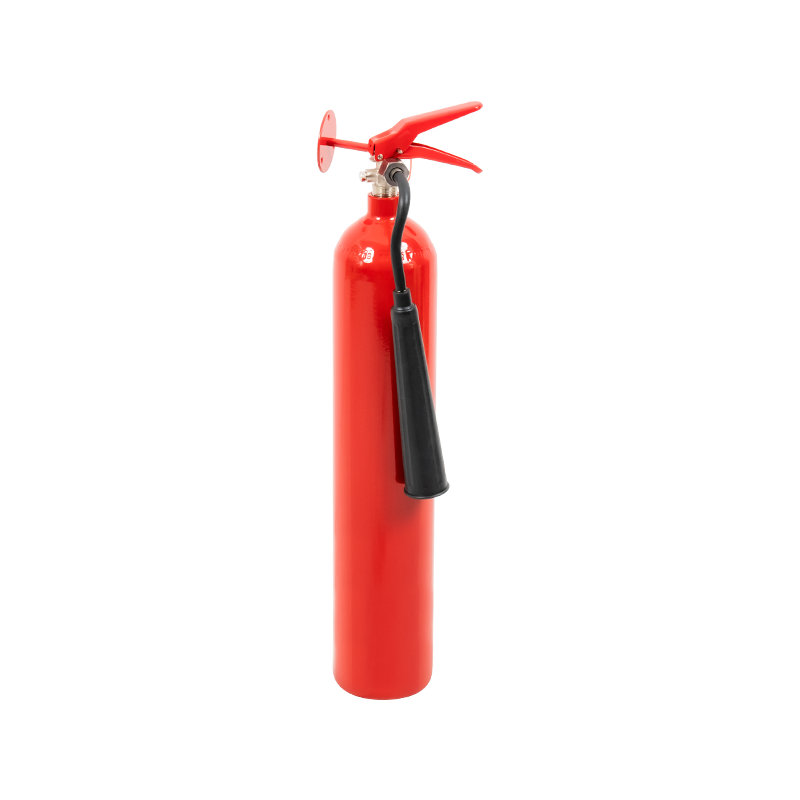
The 3kg portable steel fire extinguisher is a firefighting device designed to deal with all types of fires. Made of CK45 steel, it is sturdy and durab...
See Details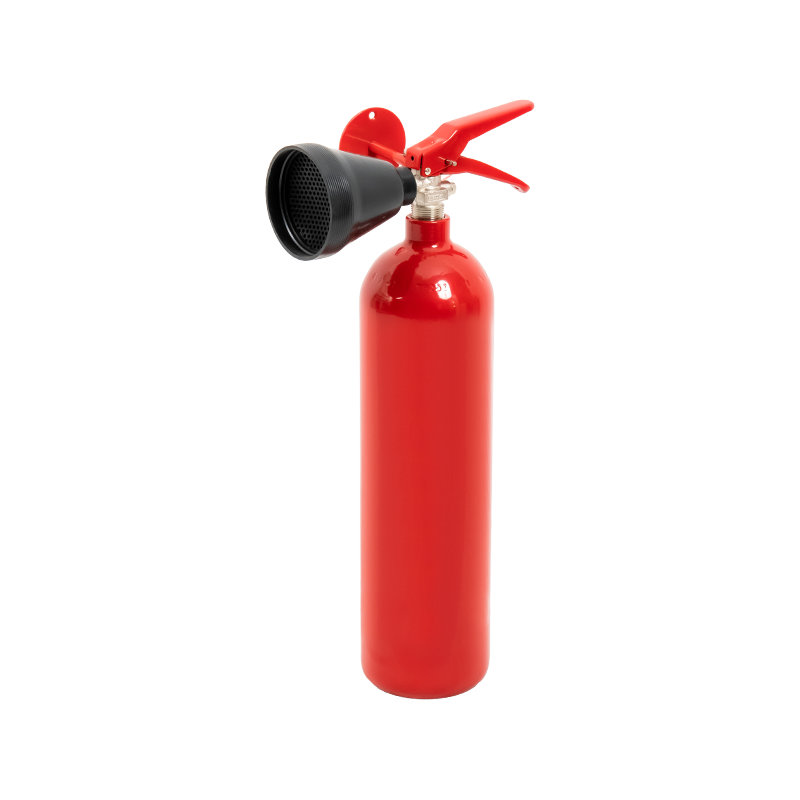
The 2kg portable CE fire extinguisher is a firefighting device designed for quick response and extinguishing of small fires. It is made of high-streng...
See Details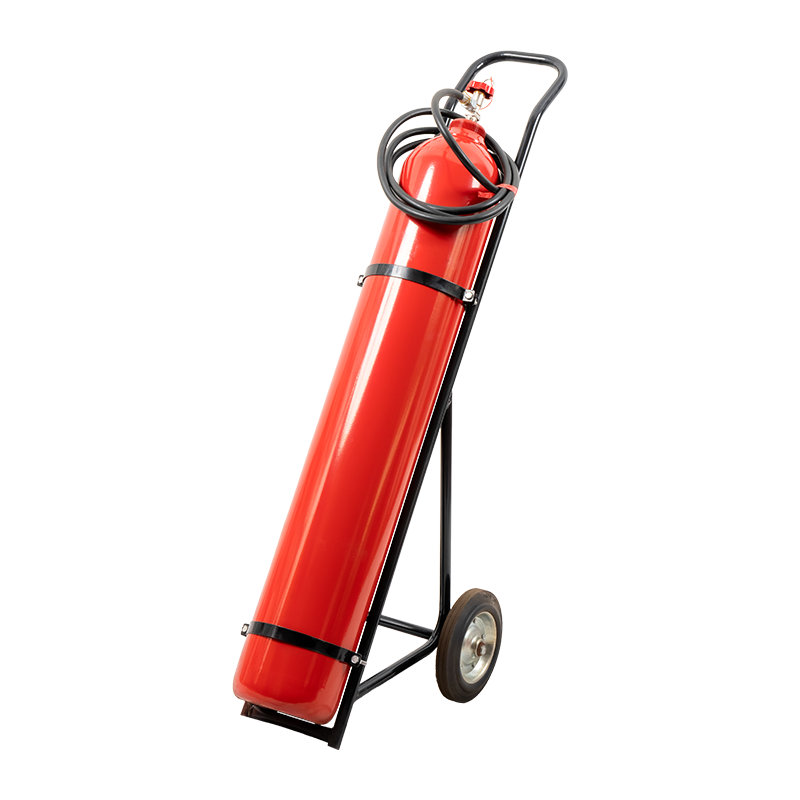
The 10KG Steel Cart-Mounted CO2 Fire Extinguisher is a portable firefighting tool consisting of a large steel cylinder with a capacity of 10kg CO2, mo...
See Details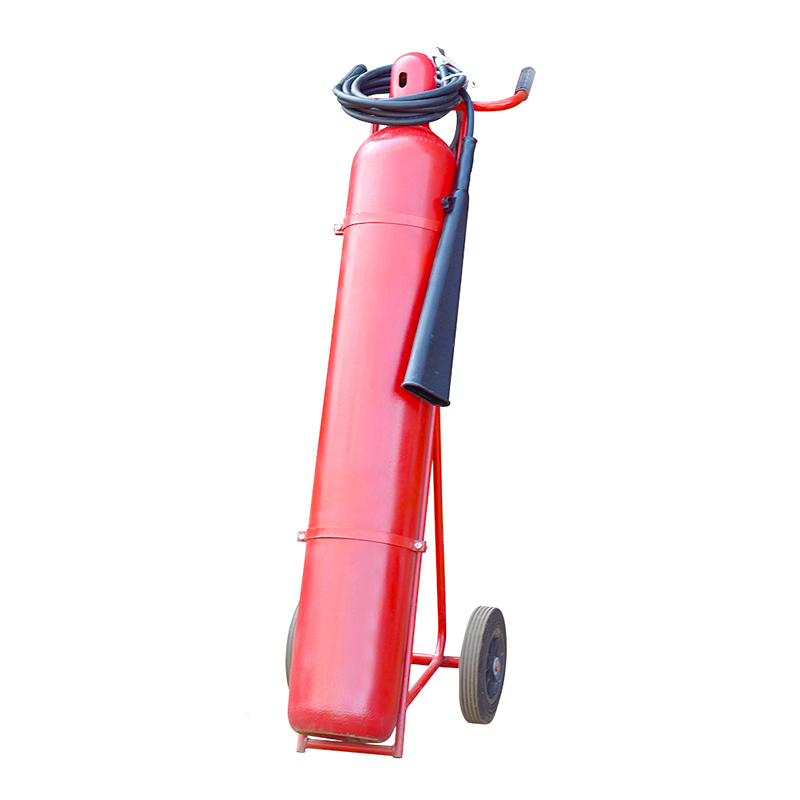
The 25kg trolley mobile fire extinguisher is a high-capacity fire-fighting equipment designed for large-scale fires. It has mechanical strength and co...
See Details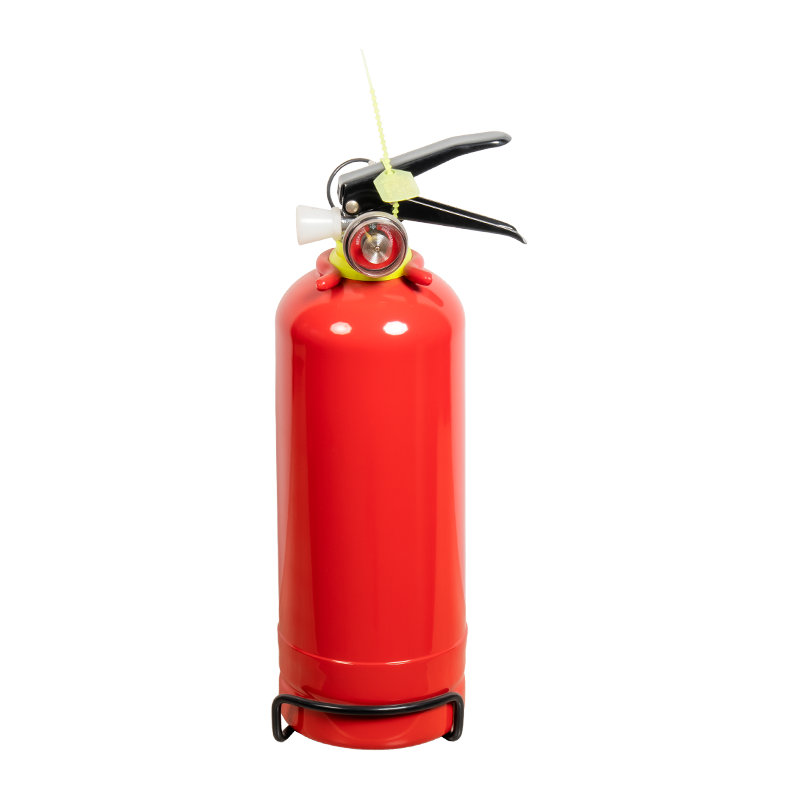
The 1kg portable dry powder fire extinguisher is a safety device used to put out small fires in emergency situations. Its outer shell is made of steel...
See Details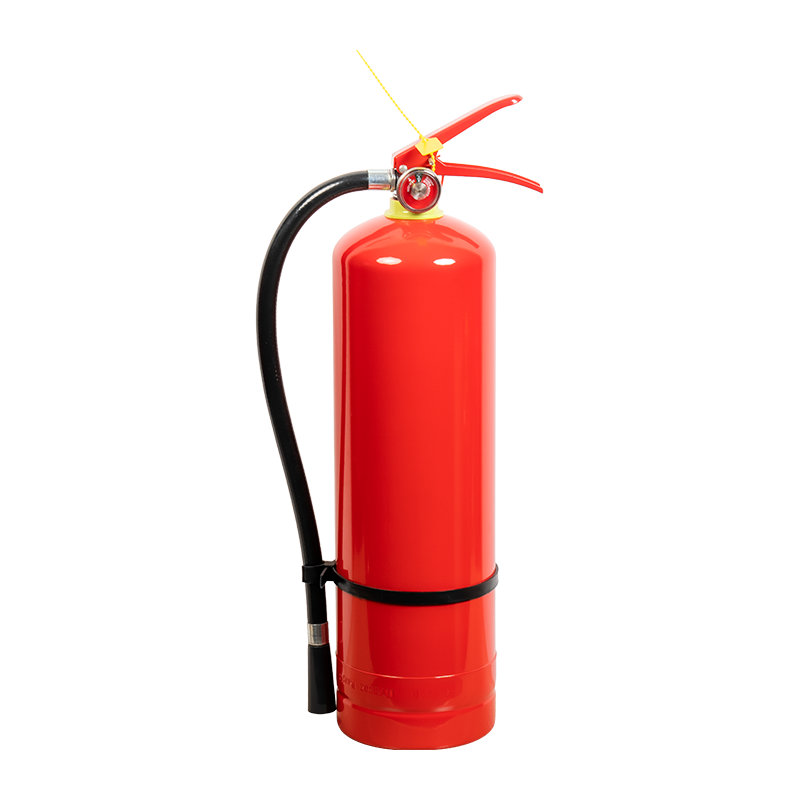
The 6kg stainless steel portable dry powder fire extinguisher is a fire extinguishing device suitable for extinguishing various small fires. Dry powde...
See Details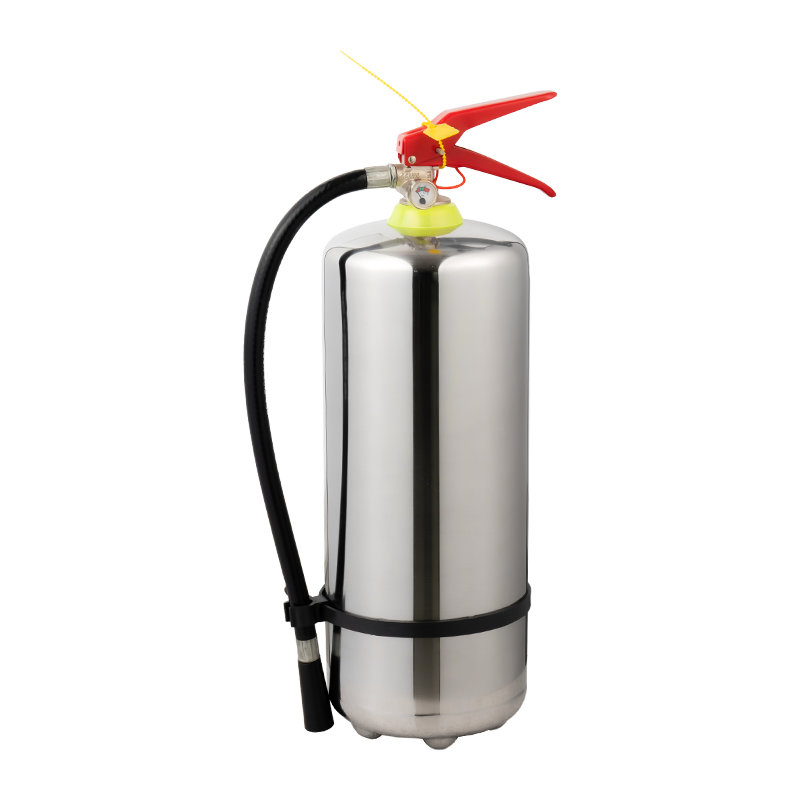
304 stainless steel 6L fire extinguisher is a professionally designed fire extinguishing equipment, made of high-quality SUS304 stainless steel materi...
See Details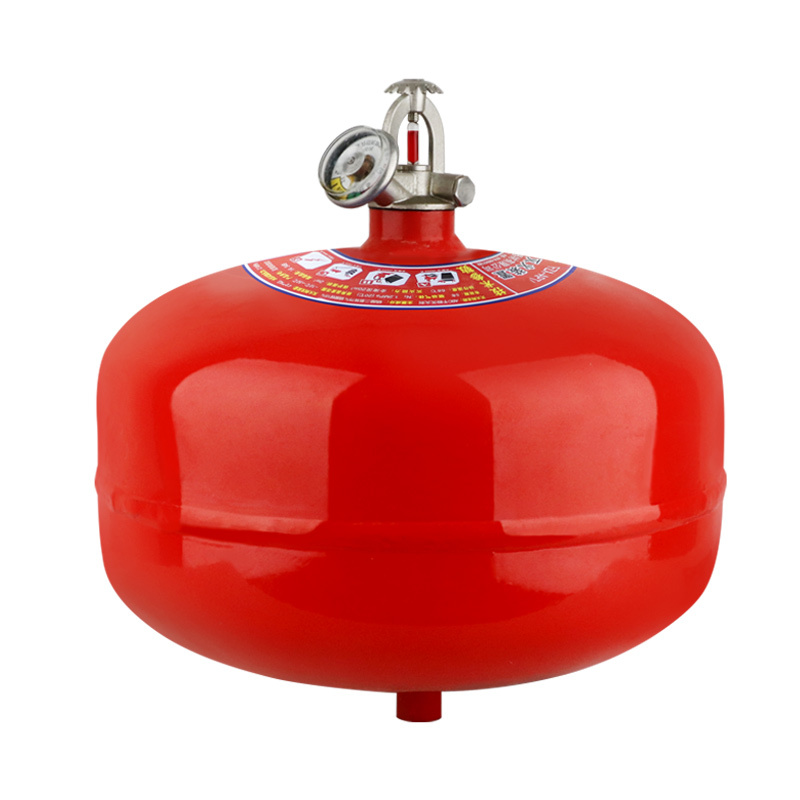
8KG hanging fire extinguisher can be installed on the wall or ceiling, fixed by hook or bracket, making it easy to quickly access and operate when nee...
See Details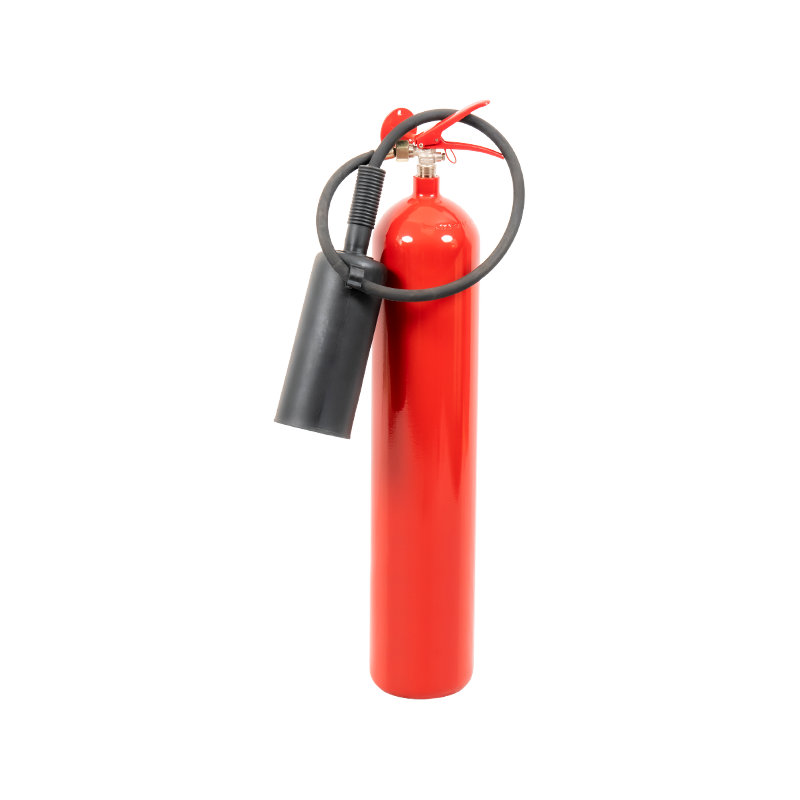
The 5kg fire-fighting carbon dioxide fire extinguisher can work in a wide temperature range, from -30˚C to +60˚C, to meet the firefighting needs in va...
See Details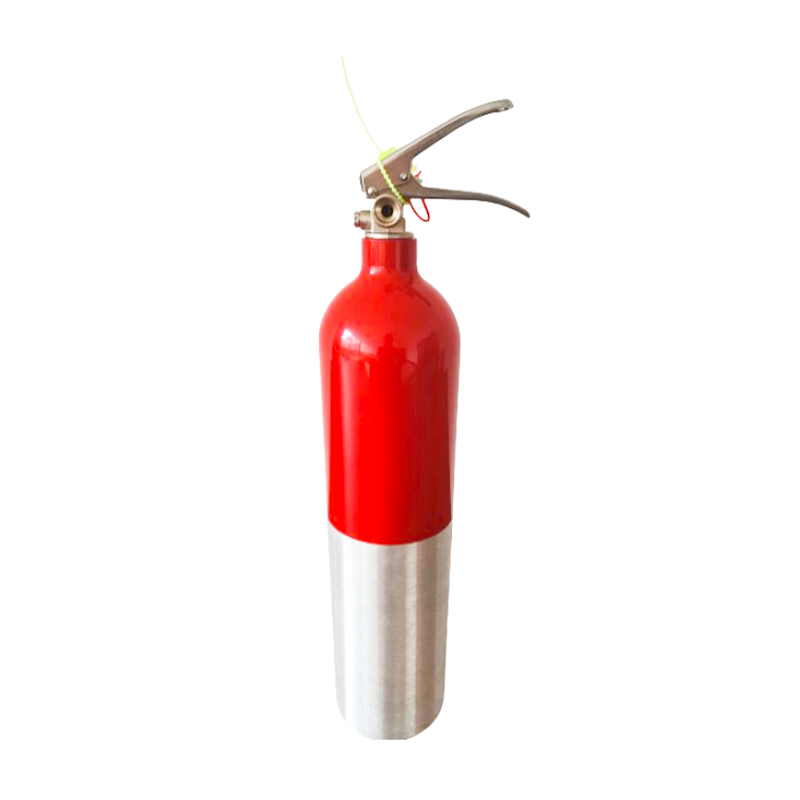
The 5KG portable aluminum fire extinguisher is an efficient and reliable fire extinguishing equipment suitable for fire protection needs in various in...
See Details
Zhejiang Yongshang Pressure Vessel Co., Ltd. was established in 2016. It is a modern enterprise integrating R&D, production and sales, specializing in the production of dry powder, carts, carbon dioxide fire extinguishers, seamless steel cylinders, and aluminum bottles.

+86 13857576559


Zhuhai Village, Gaibei Town, Shangyu District, Shaoxing City, Zhejiang Province, China
