 English
 عربى
عربى 中文简体
中文简体

3KG Portable Steel Fire Extinguisher(CK45/CE)
Cat:CO2 Fire Extinguisher (CK45/CE)
The 3kg portable steel fire extinguisher is a firefighting device designed to deal with all types of fires. Made of CK45 steel, it is sturdy and durab...
See Details
+86 13857576559
The short answer: a CO2 fire extinguisher kills a flame by flooding it with heavy, inert carbon dioxide. The gas pushes breathable air away from the fire — the flames starve of oxygen — while the expanding gas chills the burning surface at the same time, and nothing is left behind to clean up.
You can recognize one across a room: a hard, trumpet-shaped horn instead of a narrow nozzle, and no pressure gauge at all. Both details follow from how the machine works, and once you understand them, most buying and maintenance advice around CO2 units starts to make sense.
Flaming combustion needs fuel, heat and oxygen in the same place. Remove any one and the reaction stops. A CO2 extinguisher attacks two sides of this triangle at once. The smothering side first: carbon dioxide is about one and a half times denser than air, so it sinks and settles over the burning surface like an invisible lid, pushing oxygen around the flames below the level where combustion sustains itself.
The cooling side is less obvious. Inside the cylinder CO2 is stored as a liquid under pressure. The moment it escapes, it expands to several hundred times its liquid volume and the temperature plunges to around -78 °C. Much of what leaves the horn is a freezing cloud of gas and dry-ice snow, so the blanket settling over the fire is also drawing heat out of the fuel.
A CO2 extinguisher does not fight fire with chemistry. It takes away the air — and much of the heat — faster than the fire can adapt.
At room temperature carbon dioxide stays liquid only under pressure — roughly 55 to 57 bar in a sealed cylinder. That pressure comes from the CO2 itself, so a CO2 extinguisher needs no propellant charge: the gas drives itself out. Water, foam and powder units work differently, holding their agent under added nitrogen and showing a gauge to monitor it.
A CO2 unit has no gauge because a gauge on saturated CO2 would only report the temperature, not the remaining content. The honest instrument is a set of scales: the charge is checked by weight against the figure stamped on the cylinder.
Five parts do all the work:
The valve deserves particular attention, because it is the only moving part between 55 bar and an open room. Its machining and sealing decide whether the unit discharges cleanly and whether it holds pressure for years in a dusty corridor. We make CO2 extinguisher valves alongside our cylinders so the two are proven as a pair at full working pressure.
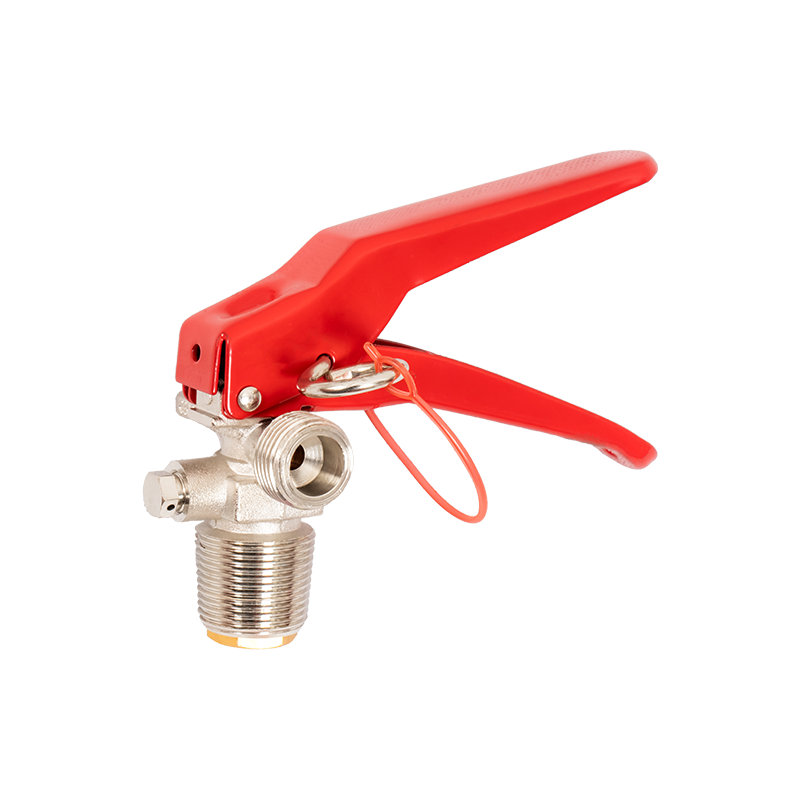 CO2 Fire Extinguisher ValveThe valve is the only moving part between the high-pressure cylinder and the open room, so its machining and sealing determine clean discharge and long-term pressure retention. These valves are made alongside the cylinders and pressure-tested as a pair.View Product →
Squeeze the lever and the sequence is almost instant: the valve opens, pressure inside drops, and part of the liquid CO2 flashes into gas. That expanding gas drives the remaining liquid up through the valve and into the horn, where it decompresses into a freezing white cloud. The crackling snow sometimes seen at the horn is dry ice forming on the spot.
The trumpet shape of the horn is engineering, not decoration. A wide, slow cloud settles over the burning surface and stays there; a narrow, fast jet would punch through its own gas blanket and, with burning liquids, splash fuel where you least want it. Stand about a metre back, keep the horn low and sweep slowly so the blanket can build.
CO2 is the default choice for two fire classes. On flammable-liquid fires — solvents, paints, fuels — the gas blanket smothers the surface without stirring it. On fires involving live electrical equipment it is non-conductive and leaves nothing behind, which is why server rooms, distribution boards, laboratories and control cabinets keep one within reach. Indoors, where the gas can settle instead of blowing away, it performs at its best.
For desks, small electrical cabinets and single-room server closets, a compact 2 kg CK45/CE unit usually covers the risk without the weight of a full-size cylinder.
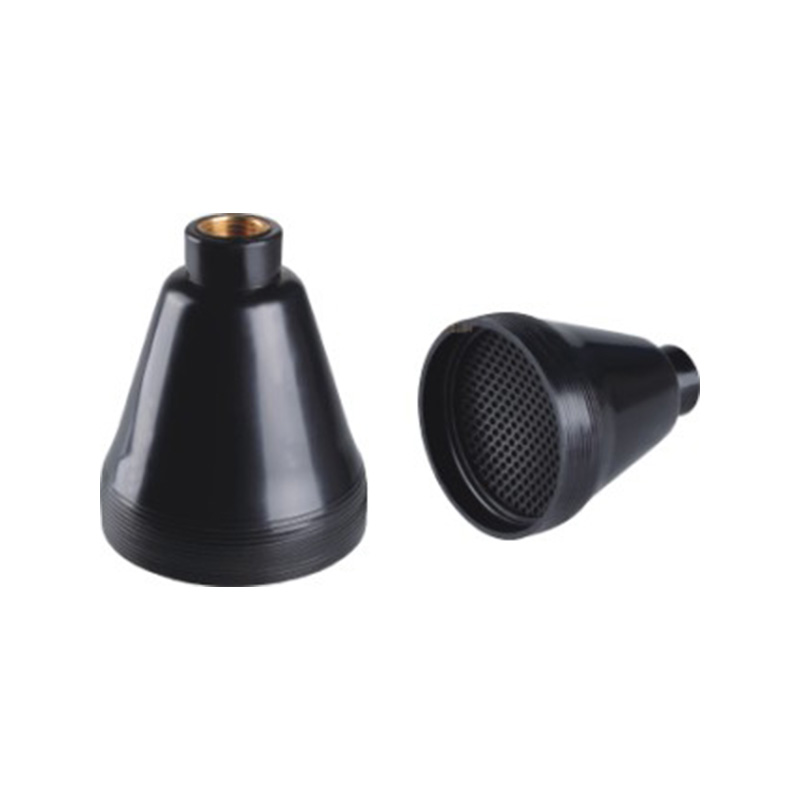 2kg Portable CO2 Fire Extinguisher (CK45/CE)This compact 2 kg CE unit suits desks, small electrical cabinets, and single-room server closets, covering those risks without the weight of a full-size cylinder. CO2 leaves no residue, making it practical around electronics.View Product →
The limits are just as specific. On deep-seated Class A fires — timber stacks, paper archives, textiles — CO2 cannot displace enough oxygen inside the smoldering material and re-ignition is common. Outdoors, or wherever there is airflow, the blanket disperses before it settles. Burning metal is another matter: hot magnesium strips the oxygen out of carbon dioxide itself, so CO2 is not the answer there either.
Set beside the other common media, CO2's profile is easy to read:
| Type | Best suited for | Live electrical | Residue left | Main limitation |
|---|---|---|---|---|
| CO2 | Flammable liquids and live electrical equipment | Yes | None — the gas dissipates | Weak on deep-seated Class A fires; wind disperses it |
| Dry powder | Mixed-risk areas and flammable liquids | Yes, but powder harms electronics | Fine powder on everything | Cuts visibility and is hard to clean up |
| Foam | Flammable liquids and general solids | No | Foam residue | Not suitable for live equipment |
| Water | Wood, paper and textiles | No | Wet | Conductive and limited to Class A risks |
Read together, the table explains why many facilities pair a CO2 unit for the electrical risk with water, foam or powder for everything else — each covers the other's blind spot.
Capacity is a trade between reach, discharge time and weight. A 2 kg handheld empties in the region of ten seconds; a 5 kg unit stretches to roughly fifteen; a 10 kg trolley model buys extra time on wheels for plant rooms and fuel stores. Choose by the size of the risk, not the price per kilogram.
For offices, workshops and corridors, 5 kg is the volume most risk assessments settle on: enough time to build a proper blanket over a liquid or electrical fire, still liftable by one adult.
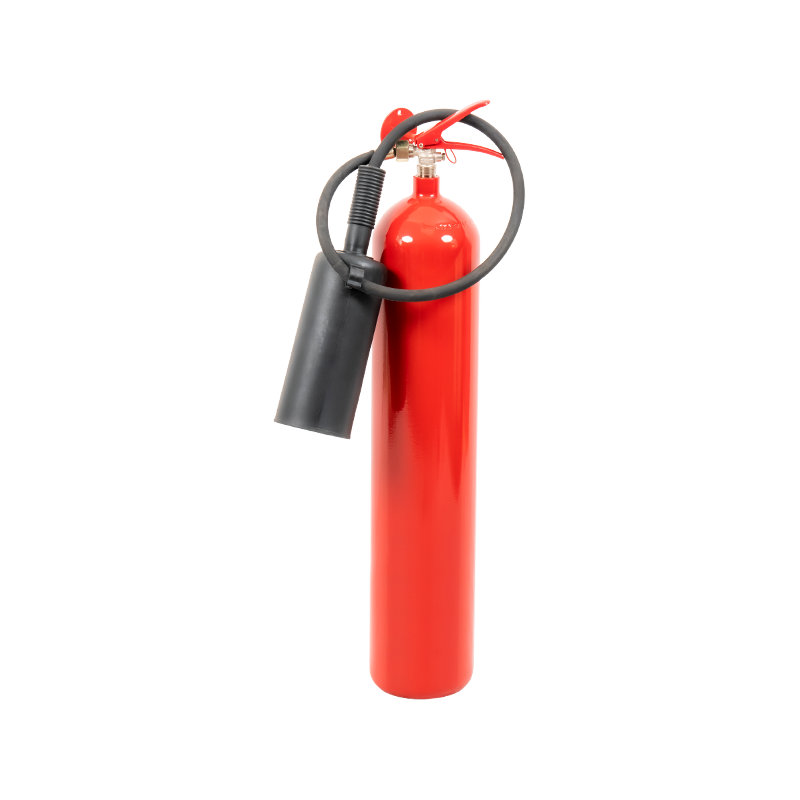 5kg Steel Portable CO2 Fire ExtinguisherAt 5 kg, this steel unit provides enough discharge time to build a proper CO2 blanket over a liquid or electrical fire while remaining liftable by one adult, which is why most office, workshop, and corridor risk assessments settle on this size.View Product →
Temperature deserves more attention than it usually gets. Cylinder pressure follows temperature, so a unit stored in an unheated corridor or cold store develops lower internal pressure and a shorter, weaker jet. Check the rated operating range before fixing extinguishers in unconditioned spaces; a model specified for a wide range costs little more and keeps its reach in winter.
Three details separate a compliant extinguisher from a cheap lookalike: a seamless CK45 cylinder, CE-marked and built to recognized standards such as ISO 9809; a valve with clean machining, a positive seal and a working safety relief — the weakest point of a 55-bar machine is always its joints; and hydrostatic test records showing when the cylinder was last proven. We test every cylinder before the valve goes on, which is the cheapest insurance in the product.
Mechanically a CO2 extinguisher is one of the simplest devices on the wall, which makes its upkeep short but non-negotiable.
For the fuller routine, our guide on how a CE fire extinguisher should be maintained sets out the checks in the order a service technician would run them.
Squeeze the lever and a seamless steel cylinder gives up its 55-bar secret: liquid carbon dioxide flashes into a freezing, heavier-than-air cloud that settles over the fire, pushes the oxygen away and chills the fuel until the triangle collapses. The missing gauge, the trumpet horn and the annual weigh-in all follow from that one principle.
Choose the size by the room and the fire class, place the unit near the exit from the risk area, and weigh it once a year. Few pieces of safety equipment have physics you can summarize in a paragraph, and few depend as much on habits that take less than a minute.
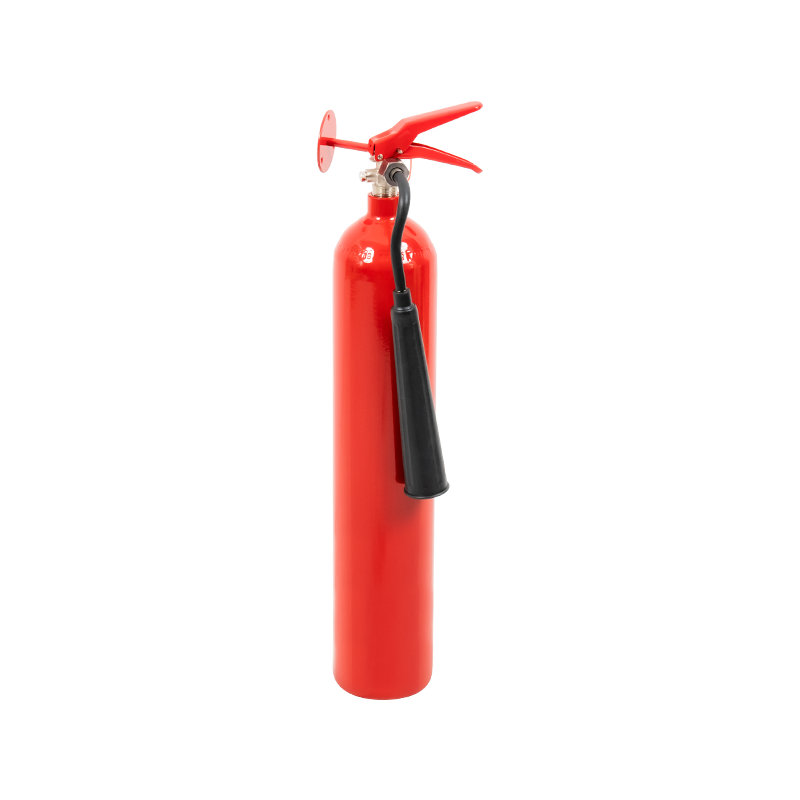
The 3kg portable steel fire extinguisher is a firefighting device designed to deal with all types of fires. Made of CK45 steel, it is sturdy and durab...
See Details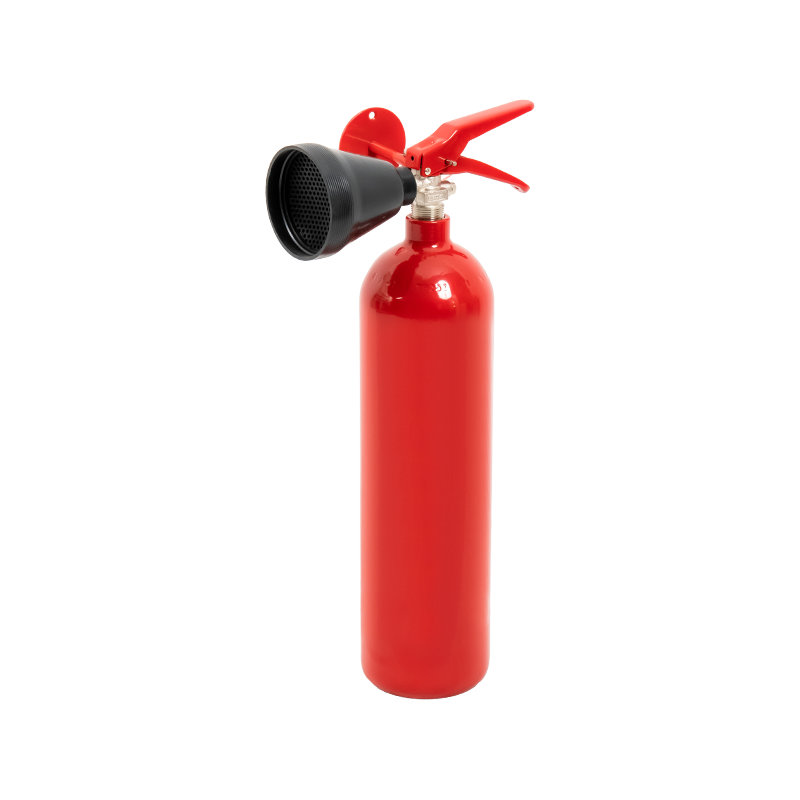
The 2kg portable CE fire extinguisher is a firefighting device designed for quick response and extinguishing of small fires. It is made of high-streng...
See Details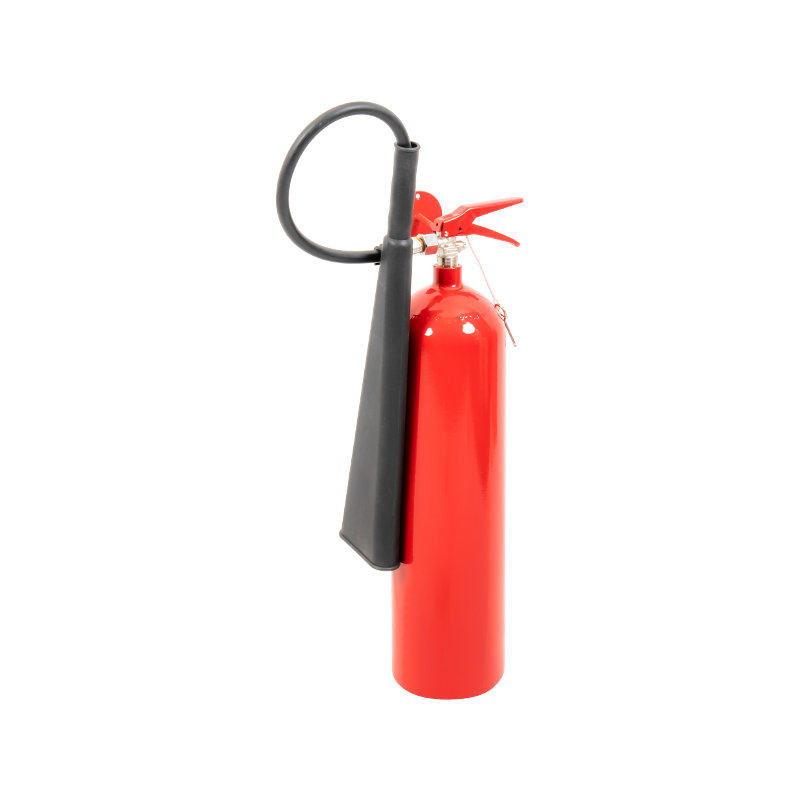
The 5kg CO2 CE extinguisher is suitable for a variety of applications, including in factories, production lines and warehouses. The 5kg CO2 extinguish...
See Details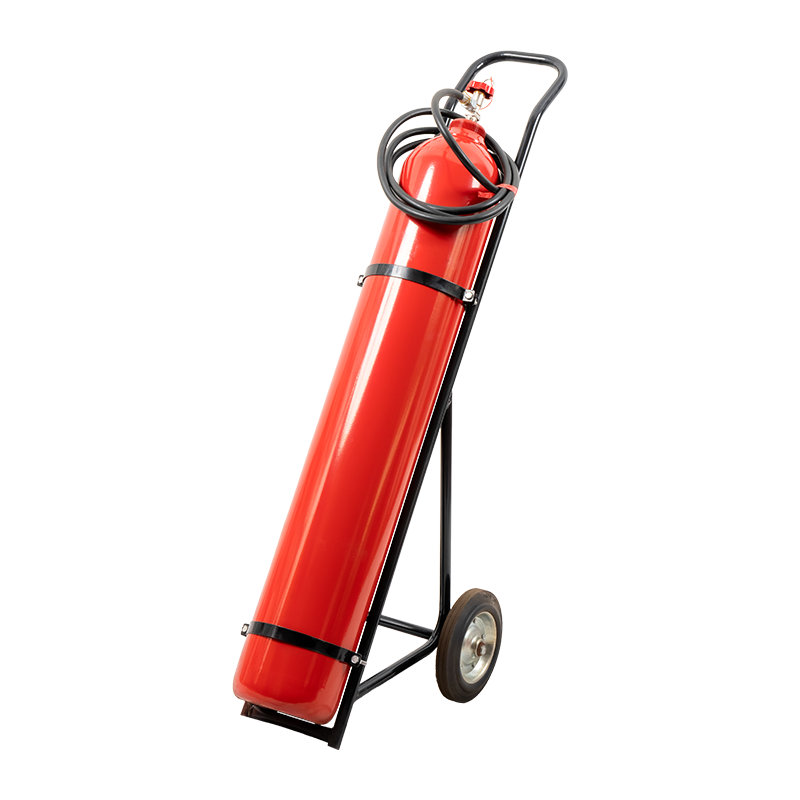
The 10KG Steel Cart-Mounted CO2 Fire Extinguisher is a portable firefighting tool consisting of a large steel cylinder with a capacity of 10kg CO2, mo...
See Details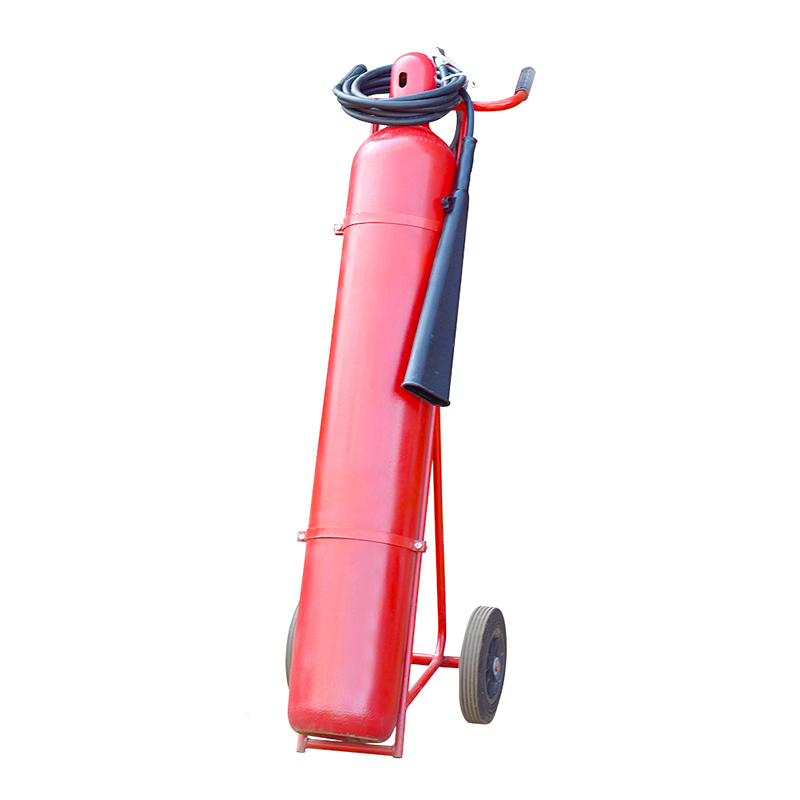
The 25kg trolley mobile fire extinguisher is a high-capacity fire-fighting equipment designed for large-scale fires. It has mechanical strength and co...
See Details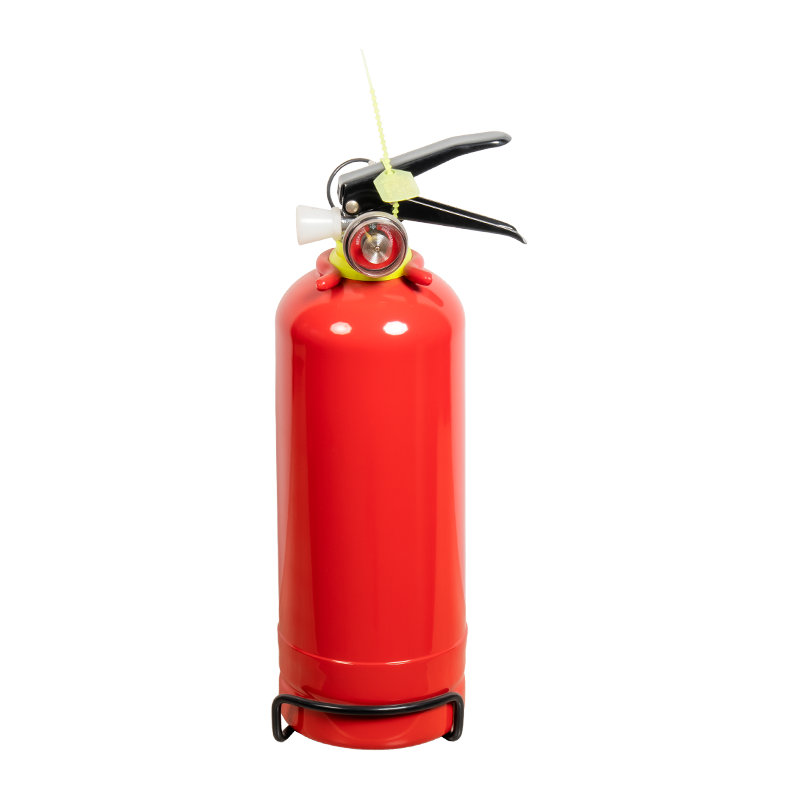
The 1kg portable dry powder fire extinguisher is a safety device used to put out small fires in emergency situations. Its outer shell is made of steel...
See Details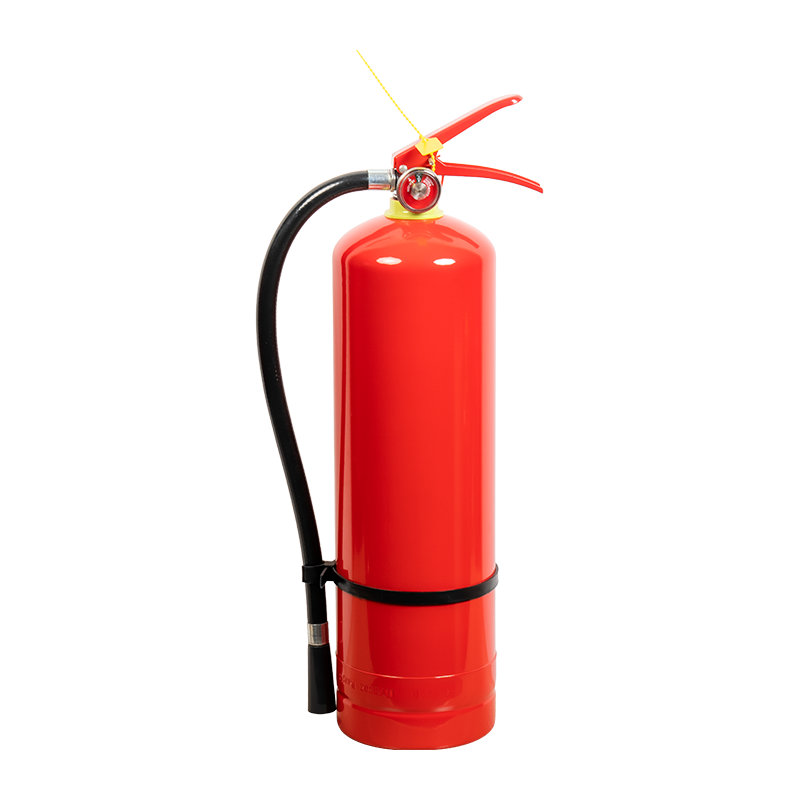
The 6kg stainless steel portable dry powder fire extinguisher is a fire extinguishing device suitable for extinguishing various small fires. Dry powde...
See Details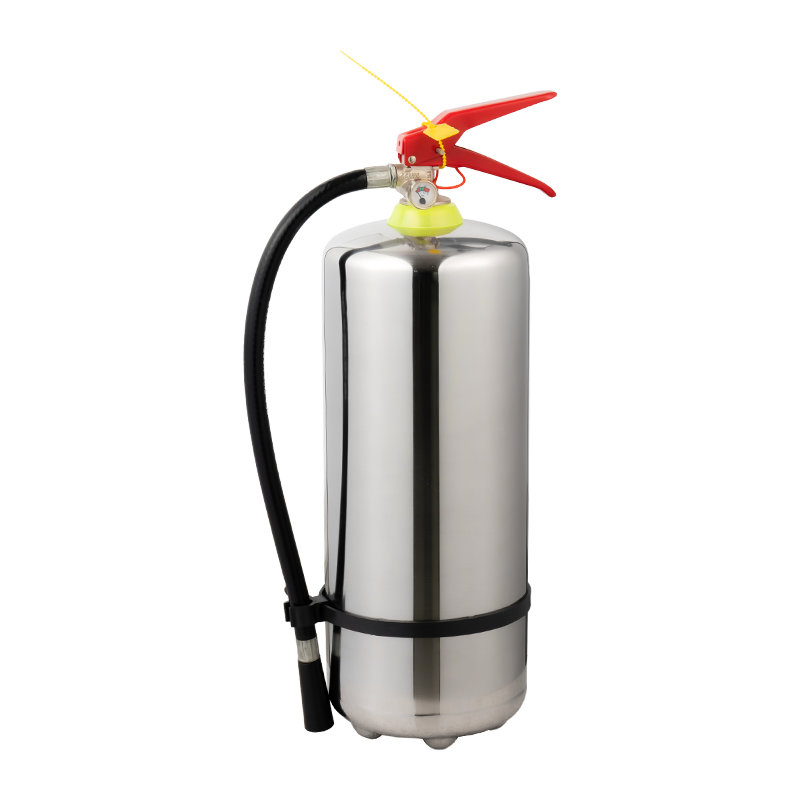
304 stainless steel 6L fire extinguisher is a professionally designed fire extinguishing equipment, made of high-quality SUS304 stainless steel materi...
See Details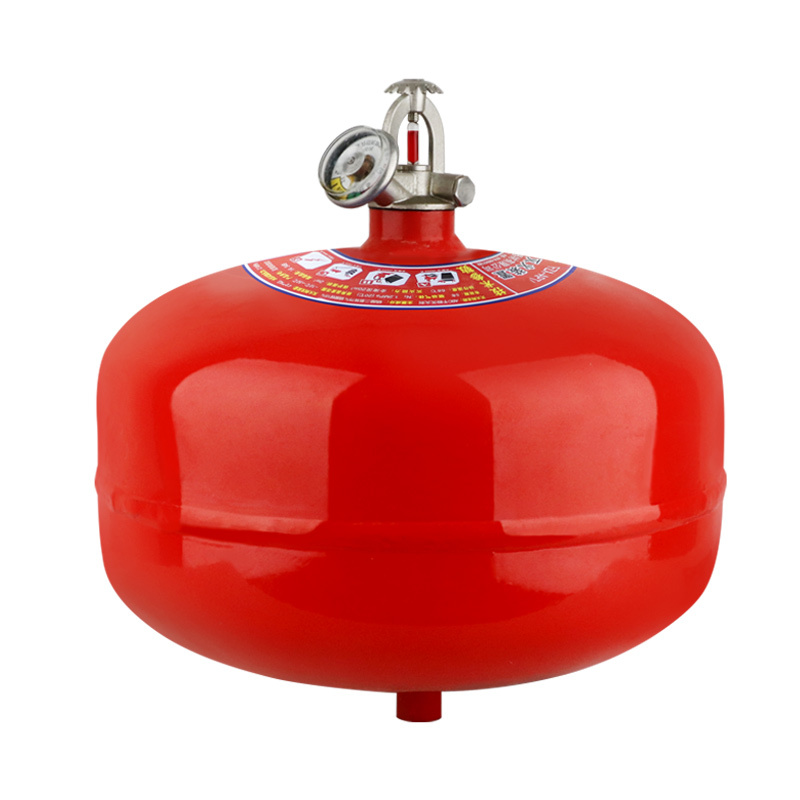
8KG hanging fire extinguisher can be installed on the wall or ceiling, fixed by hook or bracket, making it easy to quickly access and operate when nee...
See Details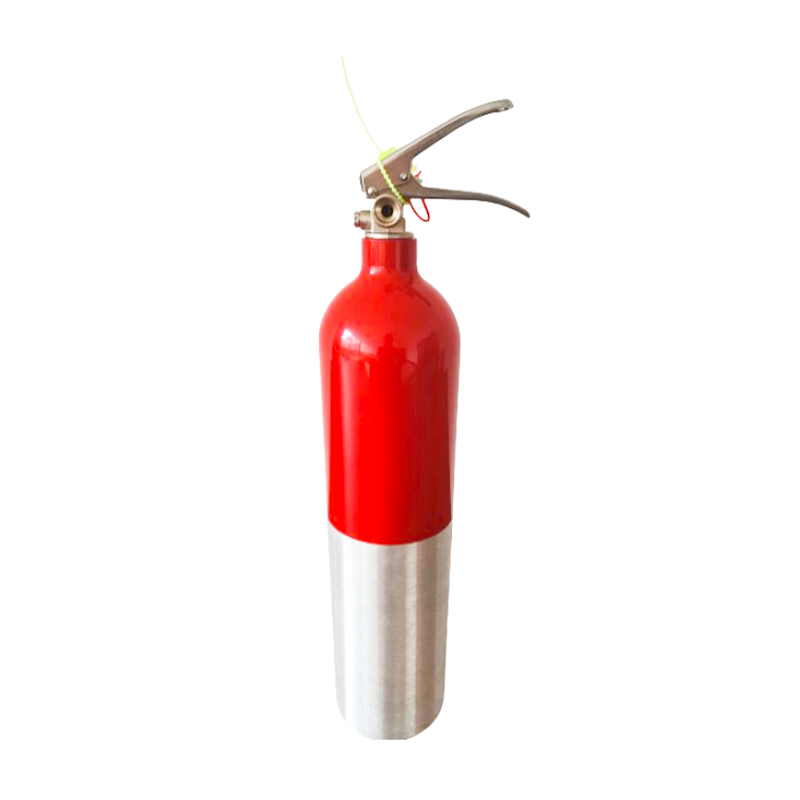
The 5KG portable aluminum fire extinguisher is an efficient and reliable fire extinguishing equipment suitable for fire protection needs in various in...
See Details
Zhejiang Yongshang Pressure Vessel Co., Ltd. was established in 2016. It is a modern enterprise integrating R&D, production and sales, specializing in the production of dry powder, carts, carbon dioxide fire extinguishers, seamless steel cylinders, and aluminum bottles.

+86 13857576559


Zhuhai Village, Gaibei Town, Shangyu District, Shaoxing City, Zhejiang Province, China
