 English
 عربى
 中文简体


3KG Portable Steel Fire Extinguisher(CK45/CE)
Cat:CO2 Fire Extinguisher (CK45/CE)
The 3kg portable steel fire extinguisher is a firefighting device designed to deal with all types of fires. Made of CK45 steel, it is sturdy and durab...
See Details
+86 13857576559
We have spent years building pressure vessels and extinguishers, and this question still comes up in almost every safety briefing. It usually arrives in two forms: “Will the gas itself hurt me?” and “Could it actually kill someone?” Those are sensible questions. CO2 equipment is common in offices, workshops, boats, and electrical rooms, and the difference between a controlled discharge and a dangerous one is often just the space around you.
The short version is this: CO2 extinguishers are not designed to kill, and ordinary use in open, well-ventilated areas is very unlikely to harm a healthy adult. The serious risk appears when the gas is concentrated in a small or poorly ventilated space, or when someone discharges a unit directly at a person. That is why the answer depends less on the extinguisher label and more on the room, the airflow, and the behaviour of the people nearby.
Carbon dioxide is not carbon monoxide. It does not bind to haemoglobin in the way carbon monoxide does, and it is not a classic poison in the sense many people imagine. It is an asphyxiant. When CO2 gathers in high enough concentration, it pushes breathable oxygen out of the air. The body then struggles to get the oxygen it needs. That is the main way a CO2 extinguisher can become deadly.
In a large, open workshop, the gas mixes quickly with room air. A portable 2kg or 5kg unit may make noise, produce a cold white cloud, and leave a little condensation, but the concentration around a standing person is normally not extreme. In a small electrical cabinet, a boat cabin, a vehicle, a basement pit, or a walk-in cold room, the same discharge can behave very differently. The gas can linger, especially in low areas, and the oxygen level can fall before anyone notices.
CO2 does not poison the body in the way many people fear; it crowds out the air the body needs.
There is a second, more direct risk: never use a CO2 extinguisher on a person whose clothing or body is on fire. The cold gas stream and the very cold discharge horn can cause cold burns, and the pressure can injure eyes or skin. For a person on fire, use stop, drop, and roll, water, or a fire blanket. A CO2 extinguisher is for suitable fires in equipment and spaces, not for human beings.
Quick distinction: CO2 is not a toxic gas in normal firefighting use, but it is an oxygen-displacing gas. Treat confined spaces as the real hazard, not the cylinder itself.
Inside the cylinder, CO2 is stored as a liquid under pressure. When you squeeze the handle, it passes through a valve and expands rapidly into the discharge horn. That expansion produces a cold cloud of gas and tiny dry-ice particles. The cloud does two useful things: it lowers the oxygen concentration around the flame below the level the fire needs, and it provides a clean, non-conductive blanket that does not leave powder residue on sensitive equipment.
That same behaviour explains the risk. CO2 is heavier than air, so it can settle in low spots: pits, cable trenches, cellars, engine rooms, and the bottom of a small cabin. Air movement may eventually clear it, but you should not rely on a guess. If a unit has been discharged in a confined area, ventilate first and use an oxygen meter before anyone re-enters. The gas is invisible, and a person can feel fine one moment and light-headed the next.
For buyers comparing formats, it helps to look at the whole CO2 family rather than a single cylinder size. Portable units suit quick response, while larger trolley units suit bigger bays and longer duty cycles.
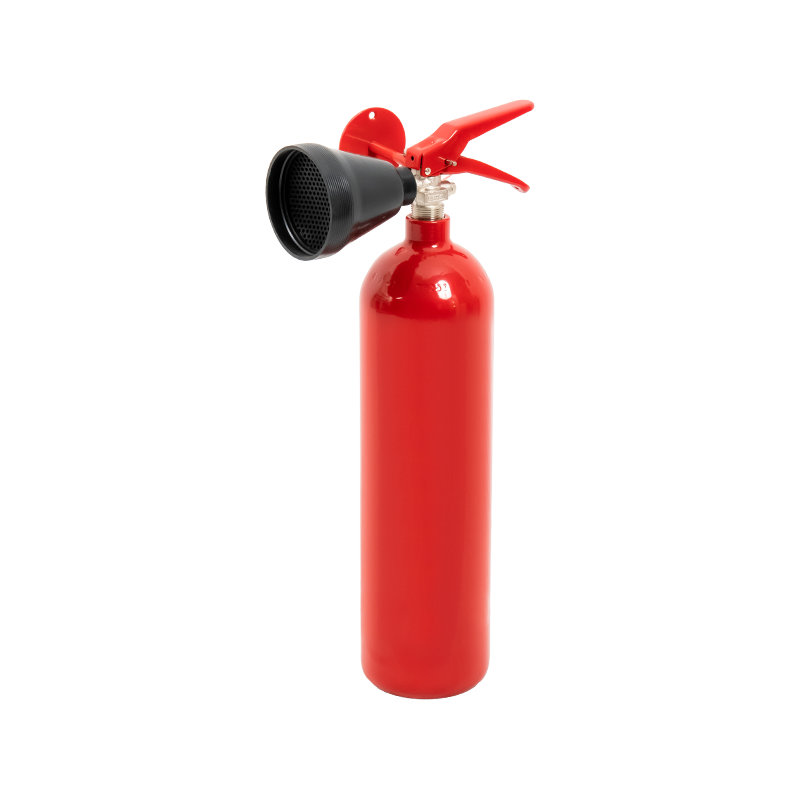 CO2 Fire Extinguishers: Portable and Trolley FormatsBrowse portable and trolley CO2 extinguishers for clean, non-conductive suppression in electrical and residue-sensitive areas.View Product →
Most CO2 incidents are not mysterious. They come from a small number of predictable mistakes. Understanding those mistakes is more useful than memorising a single “safe distance” that changes with room size, airflow, and unit capacity.
| Risk | What creates it | Safer response |
|---|---|---|
| Oxygen displacement | CO2 fills a small or low-lying space and reduces breathable oxygen. | Evacuate, ventilate, and check oxygen before re-entry. |
| Cold burn | Expanding gas chills the metal horn far below freezing. | Hold the handle, not the horn, and keep skin away from the discharge path. |
| Eye or face injury | High-pressure discharge and dry-ice particles can bounce back. | Keep distance, wear eye protection, and never aim at people. |
Normal outdoor air contains only a few hundred parts per million of CO2. Indoor air quality guidance often uses around 1,000 ppm as a ventilation marker, but that is not a sharp toxicity line. The useful safety point is not a single number on a website; it is the trend in the room. At a few percent concentration, breathing can become noticeably harder, headaches and dizziness can appear, and judgement can slip. At higher levels, fainting can come quickly, especially during exertion.
That is why “the gas is not toxic” is not the same as “the gas is harmless.” A CO2 extinguisher can produce a local atmosphere that is dangerous without any smell, colour, or warning. In a plant room, a small server room, a boat engine bay, or a storage area with limited airflow, discharge only after everyone else is out. After use, ventilate and confirm the atmosphere is safe before staff return.
Warning: Never discharge a CO2 extinguisher into a small enclosed space while you are standing inside it. Get out, stay out, and let the space ventilate. Re-entry should be treated as a measured decision, not a quick check.
Where certification is part of a project specification, the CE-marked CO2 range is often the more relevant starting point because it gives buyers a clear compliance conversation from the beginning.
CE-Certified Fire Extinguisher Range for WholesaleExplore CE-marked extinguishers for industrial, public and home use, with compliance information for project specifications.View Product →CO2 extinguishers are excellent for electrical fires and clean equipment because they leave no powder residue. But the same spaces that make them useful can also make misuse more serious. Small rooms leave little volume for dilution. Low areas collect dense gas. Poor airflow lets concentration build. People working alone may not be noticed quickly if they become dizzy.
Pay particular attention to server closets, electrical switch rooms, vehicle cabins, boat engine compartments, caravans, walk-in coolers, basement pits, cable tunnels, and laboratory fume areas. In these places, a discharge should be followed by evacuation and proper ventilation, not by a casual peek inside. If a fire is already burning in a confined space and the atmosphere is uncertain, the safest move is to leave it to trained responders with breathing apparatus.
Larger industrial bays and loading areas often use trolley-mounted CO2 units for their greater capacity and mobility. The safety logic is the same: capacity is useful only when the operator understands the space and the exit route.
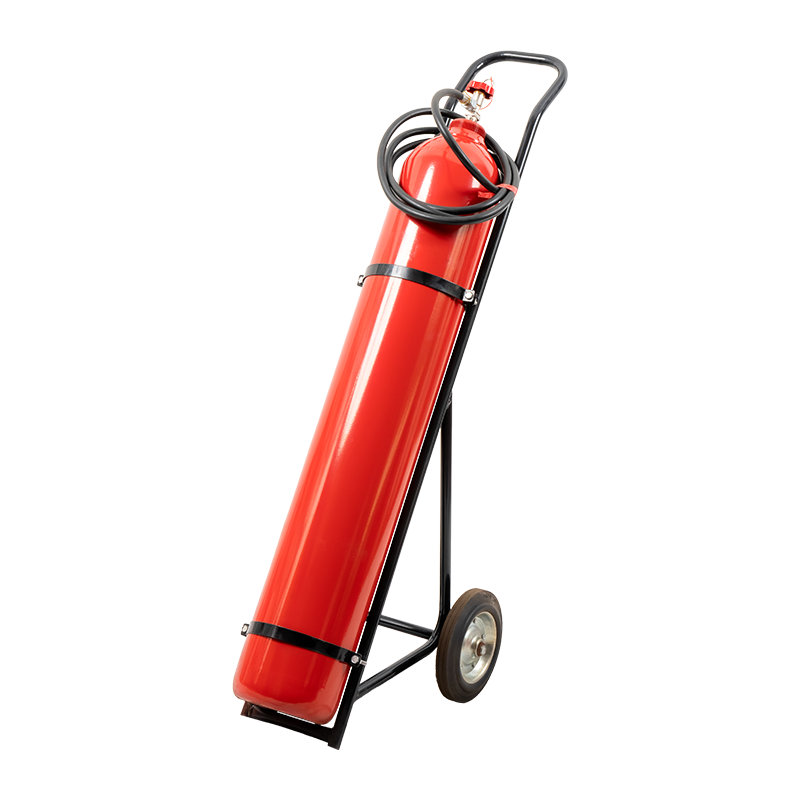 Trolley-Mounted Fire Extinguishers for Large SitesReview cart-mounted units with larger capacity and longer discharge range for industrial facilities, large buildings and commercial sites.View Product →
Move the person to fresh air as soon as it is safe to do so. Do not send an untrained person into a space that may still be oxygen-deficient. If the person is unconscious, confused, struggling to breathe, or has collapsed, call emergency services and explain that CO2 may have displaced oxygen. Give the responders the room layout and the approximate unit size, because those details help them judge the atmosphere.
The good news: most CO2 risks disappear with simple habits: clear exit routes, ventilation, oxygen monitoring in confined spaces, and a firm rule that the extinguisher is never aimed at a person.
From a manufacturing point of view, the details that matter are not only the cylinder size. The valve assembly, pressure rating, horn attachment, hose condition, and clear labelling all shape how predictable the unit is in an emergency. A well-made 5kg CO2 unit should discharge smoothly, shut off cleanly, and carry instructions that are readable before the panic starts. If you are reviewing high-pressure performance, this look at how high-pressure CO2 keeps every second counting is a useful technical companion.
Maintenance is equally practical. Check the hose for cracks, confirm the horn is secure, weigh or pressure-check the cylinder according to the local regime, and make sure the safety pin and handle are not corroded. In dusty workshops, keep the nozzle and valve clean. In coastal or humid sites, inspect for corrosion more often. A CO2 extinguisher that has lost charge may still look normal, which is why scheduled inspection matters more than a quick visual glance.
Replacement parts also deserve attention. A tired hose or a sticking CO2 extinguisher valve can turn a simple discharge into an unpredictable one. Use the correct spare for the cylinder and gas type, and do not mix parts from different pressure systems just because they appear to fit.
For teams specifying equipment, write down the space, the expected fire type, the travel distance to the unit, and the ventilation path. Then choose capacity and mounting style around those facts rather than around a catalogue photo. Training should include the location of the nearest exit, the sound of a discharge, and the rule that nobody re-enters a confined space until the air has been checked.
A CO2 fire extinguisher can kill you only in specific, largely preventable circumstances. It is not a poisonous gas in ordinary use, and a correct discharge in a well-ventilated area is very unlikely to harm a healthy adult. The real danger is oxygen displacement in confined or low-lying spaces, plus cold burns and impact injuries from careless handling. Never use CO2 on a person, never discharge it into a small space you are occupying, and never re-enter a confined area after use without ventilation and air monitoring.
If you treat CO2 as a clean, fast extinguishing agent with a serious space requirement, it remains one of the most useful tools in electrical and equipment fire safety. The equipment should be matched to the room, inspected on schedule, and supported by simple training that people actually remember. That is less about scare tactics and more about respect: respect for the gas, respect for the space, and respect for the people who have to stand near it.
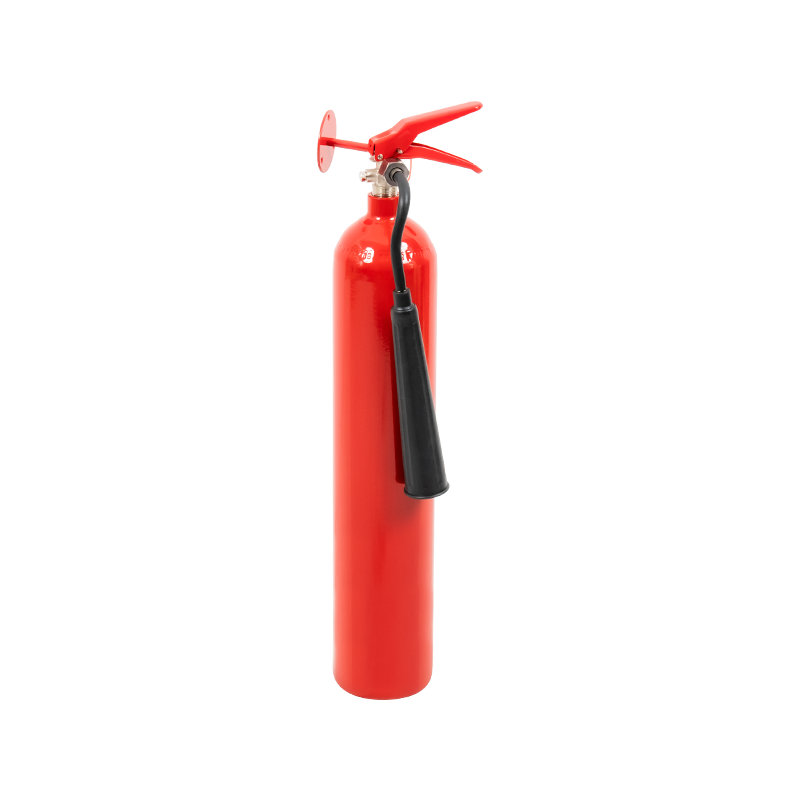
The 3kg portable steel fire extinguisher is a firefighting device designed to deal with all types of fires. Made of CK45 steel, it is sturdy and durab...
See Details
The 2kg portable CE fire extinguisher is a firefighting device designed for quick response and extinguishing of small fires. It is made of high-streng...
See Details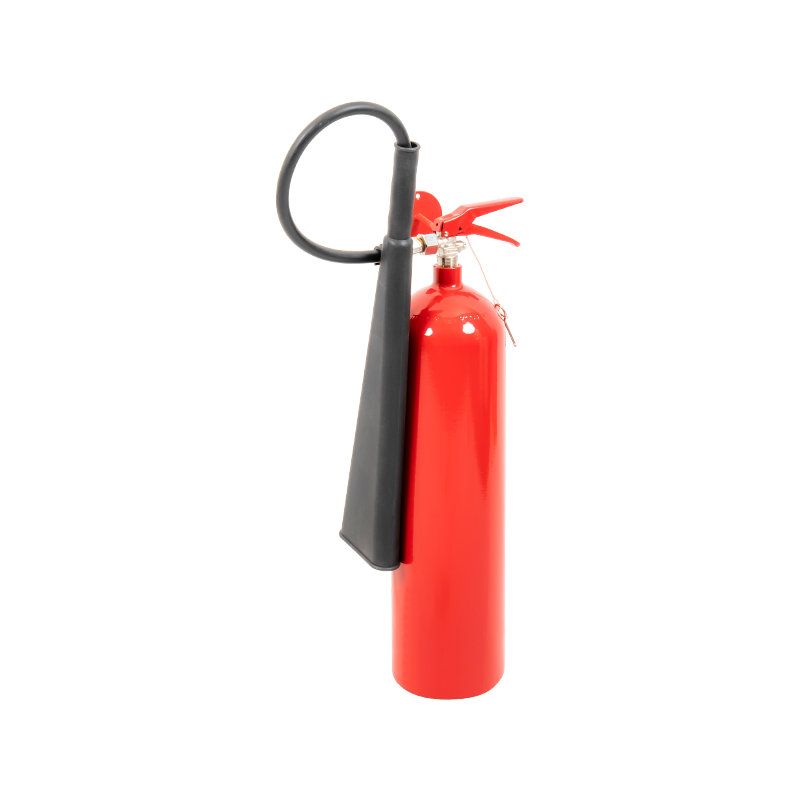
The 5kg CO2 CE extinguisher is suitable for a variety of applications, including in factories, production lines and warehouses. The 5kg CO2 extinguish...
See Details
The 10KG Steel Cart-Mounted CO2 Fire Extinguisher is a portable firefighting tool consisting of a large steel cylinder with a capacity of 10kg CO2, mo...
See Details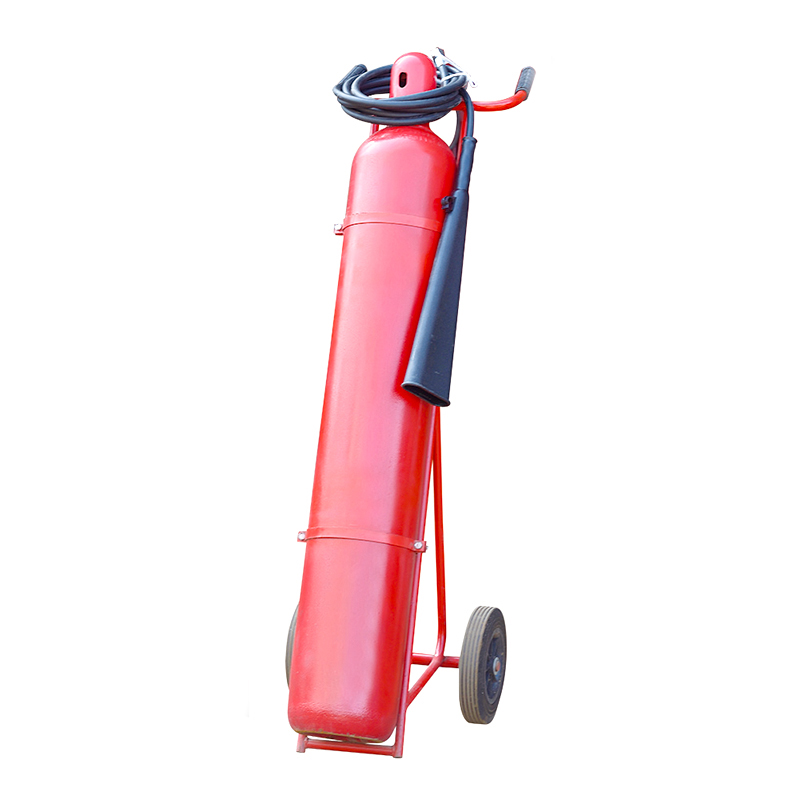
The 25kg trolley mobile fire extinguisher is a high-capacity fire-fighting equipment designed for large-scale fires. It has mechanical strength and co...
See Details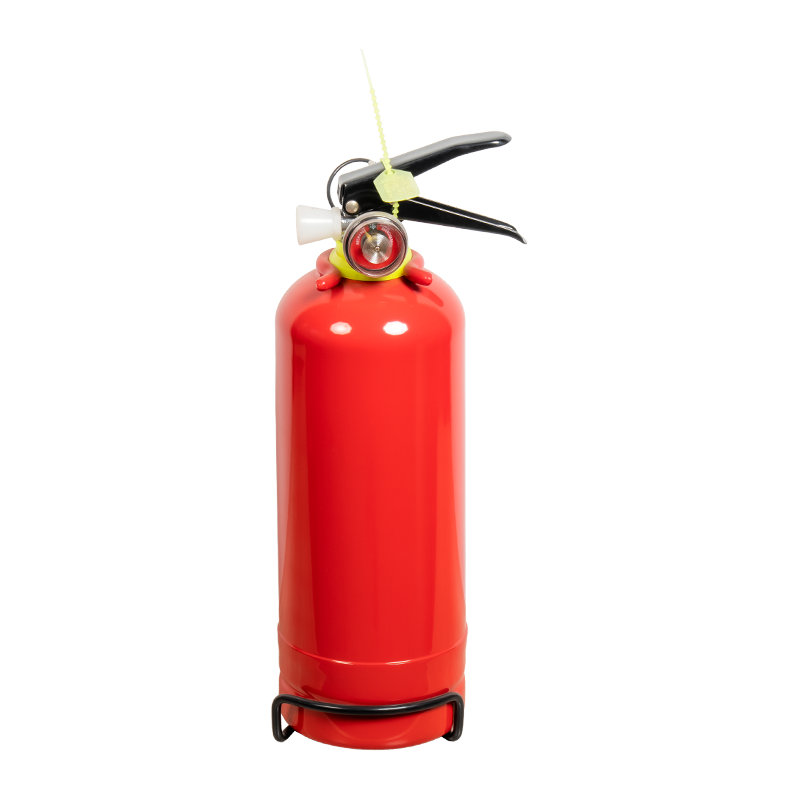
The 1kg portable dry powder fire extinguisher is a safety device used to put out small fires in emergency situations. Its outer shell is made of steel...
See Details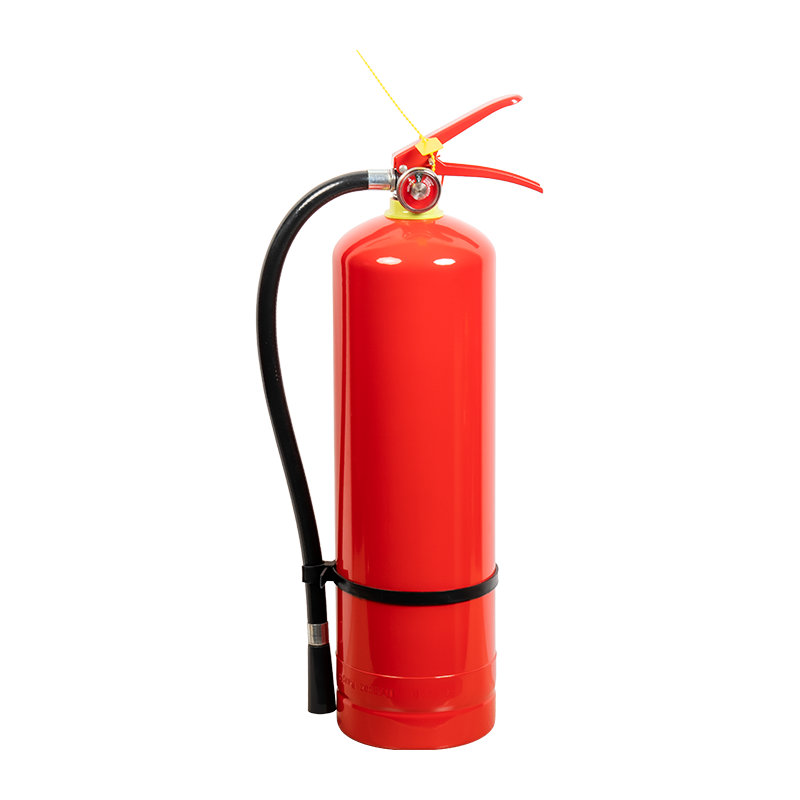
The 6kg stainless steel portable dry powder fire extinguisher is a fire extinguishing device suitable for extinguishing various small fires. Dry powde...
See Details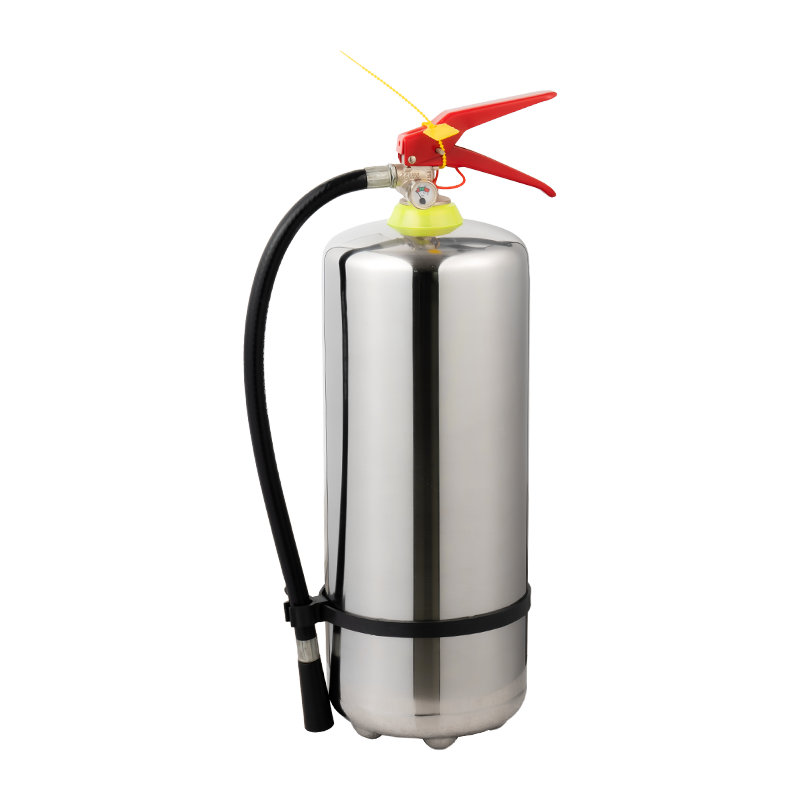
304 stainless steel 6L fire extinguisher is a professionally designed fire extinguishing equipment, made of high-quality SUS304 stainless steel materi...
See Details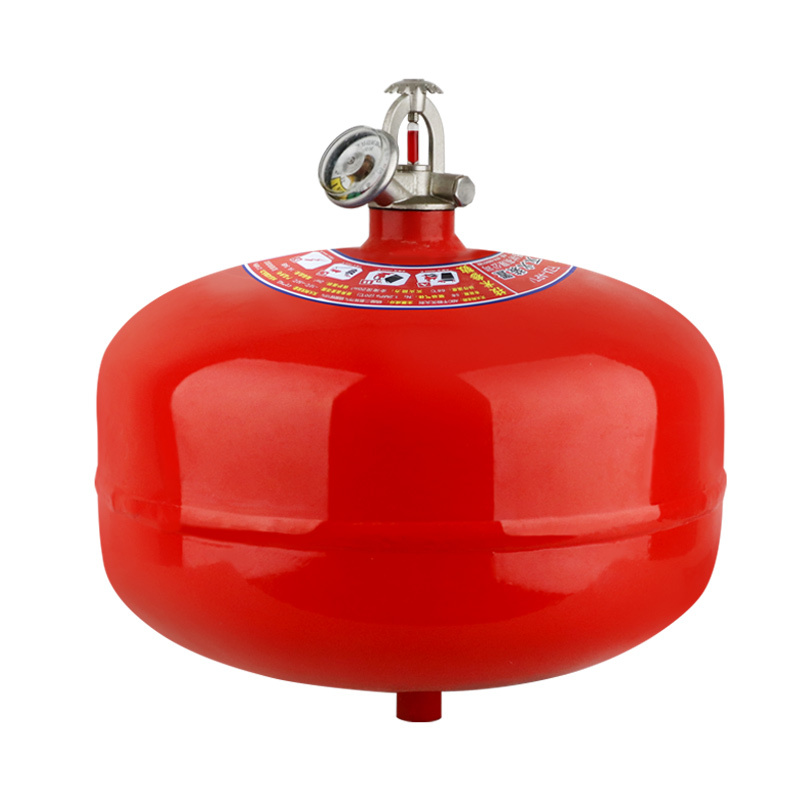
8KG hanging fire extinguisher can be installed on the wall or ceiling, fixed by hook or bracket, making it easy to quickly access and operate when nee...
See Details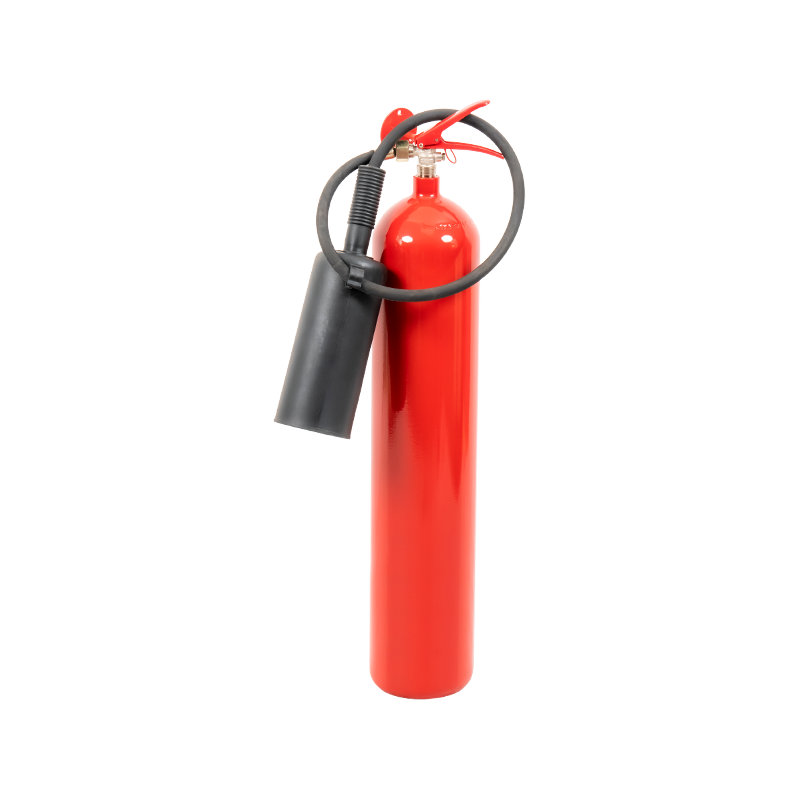
The 5kg fire-fighting carbon dioxide fire extinguisher can work in a wide temperature range, from -30˚C to +60˚C, to meet the firefighting needs in va...
See Details
Zhejiang Yongshang Pressure Vessel Co., Ltd. was established in 2016. It is a modern enterprise integrating R&D, production and sales, specializing in the production of dry powder, carts, carbon dioxide fire extinguishers, seamless steel cylinders, and aluminum bottles.

+86 13857576559


Zhuhai Village, Gaibei Town, Shangyu District, Shaoxing City, Zhejiang Province, China
